Last updated November 21, 2026
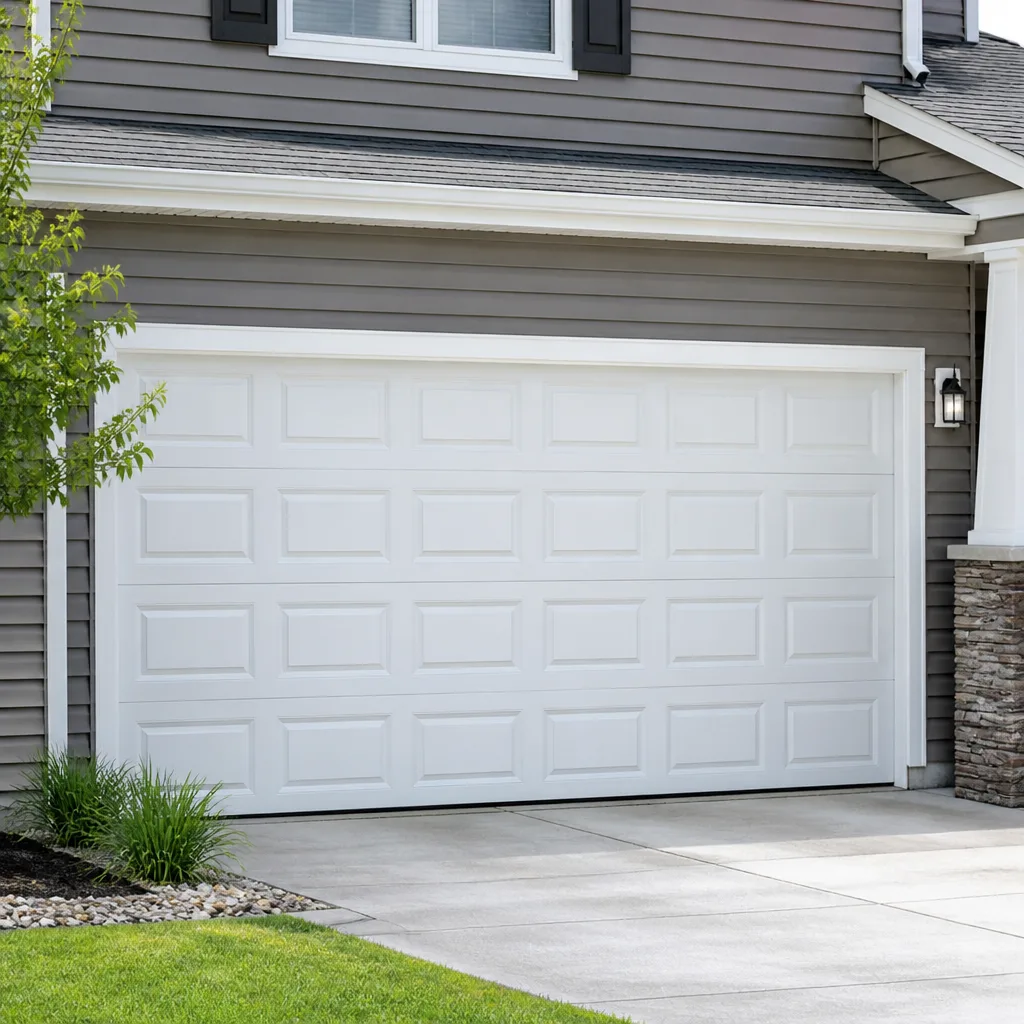 Raised-panel steel
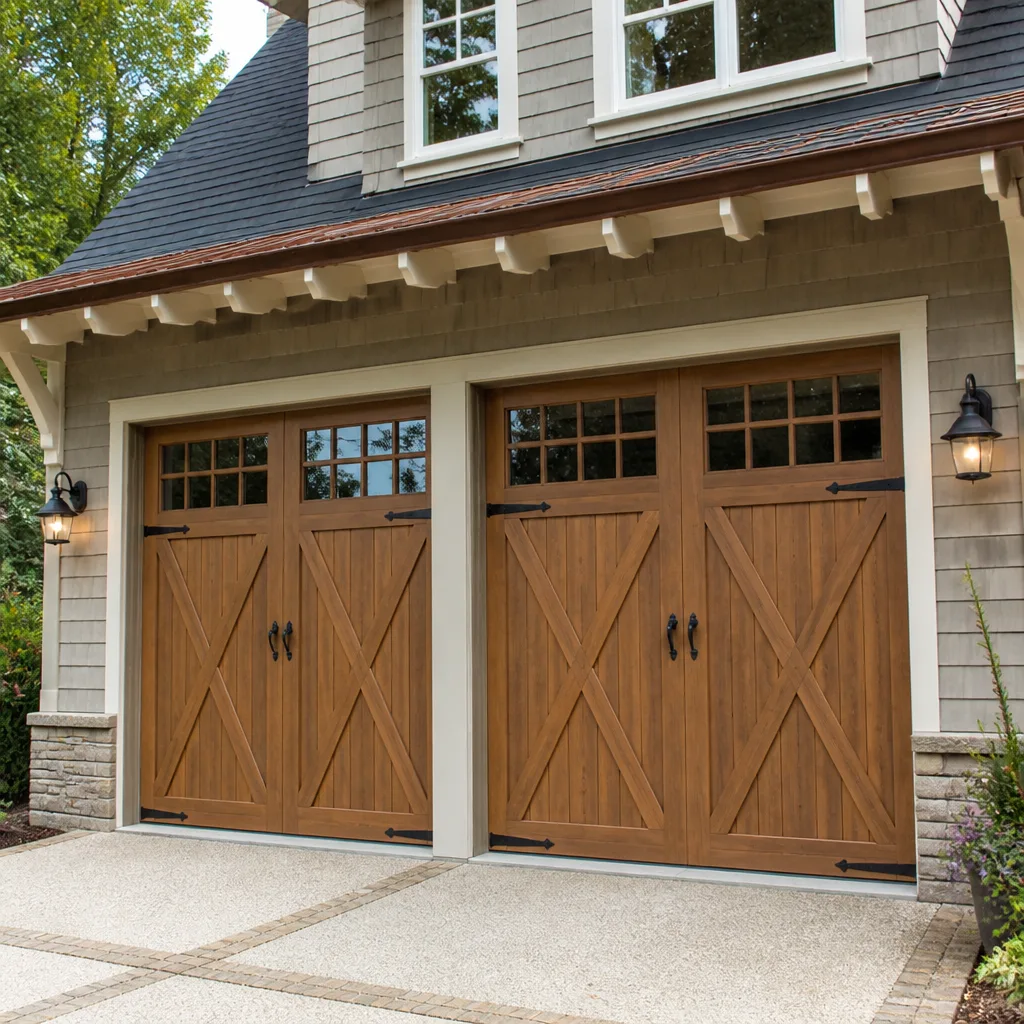 Carriage house
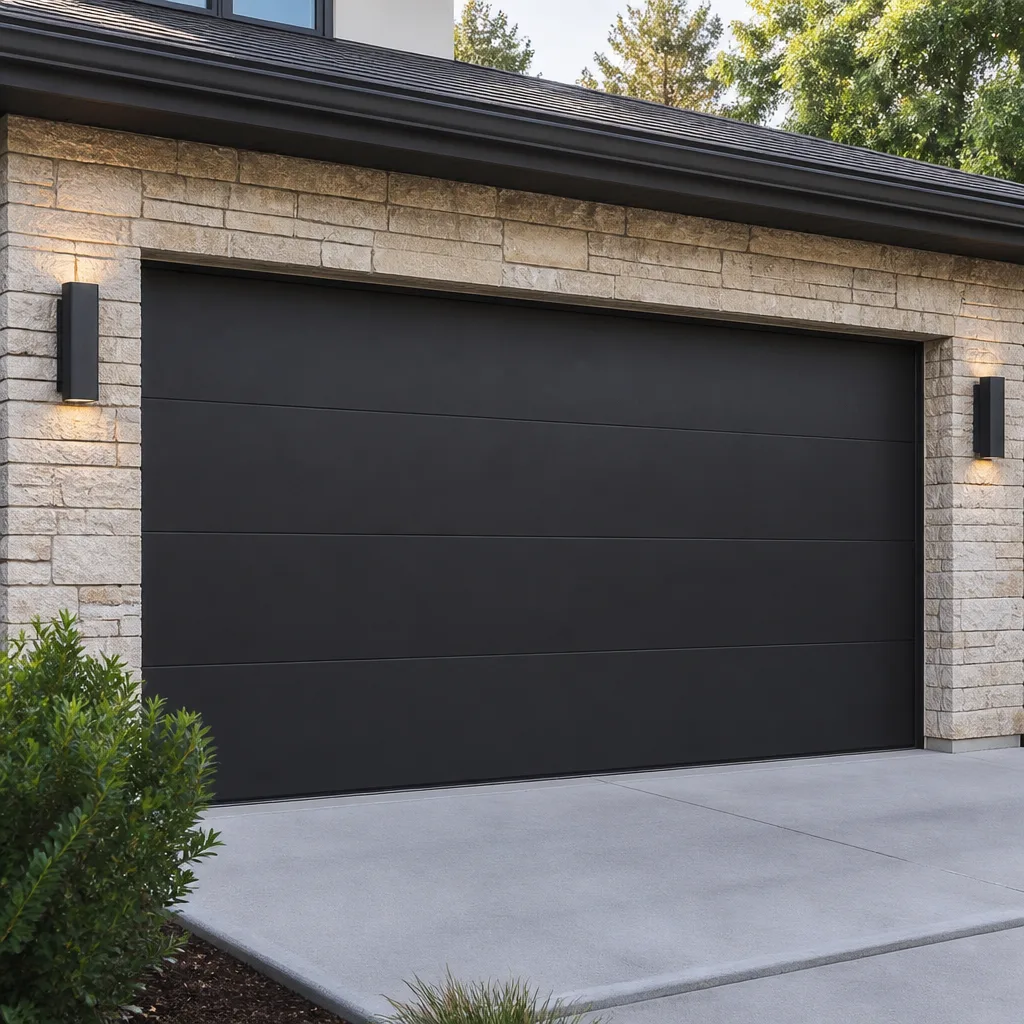 Modern flush
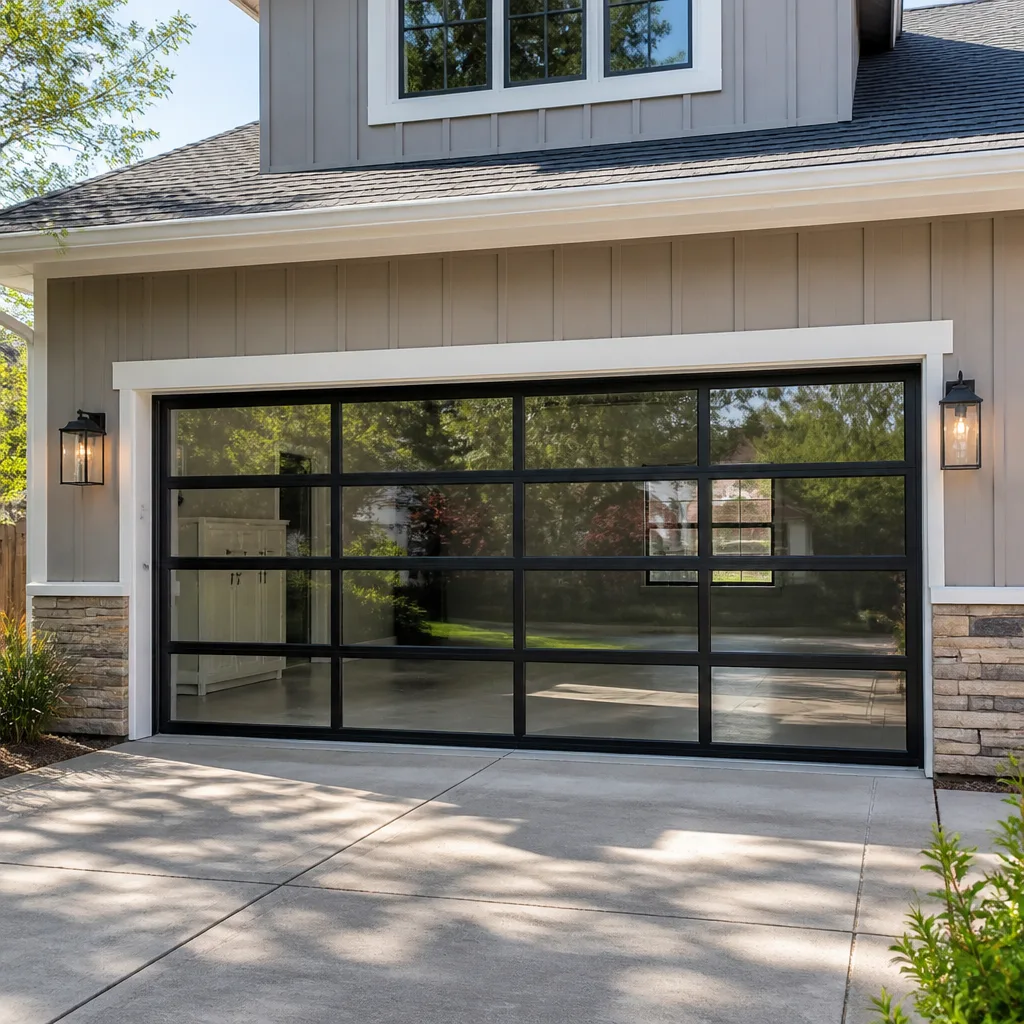 Full-view glass
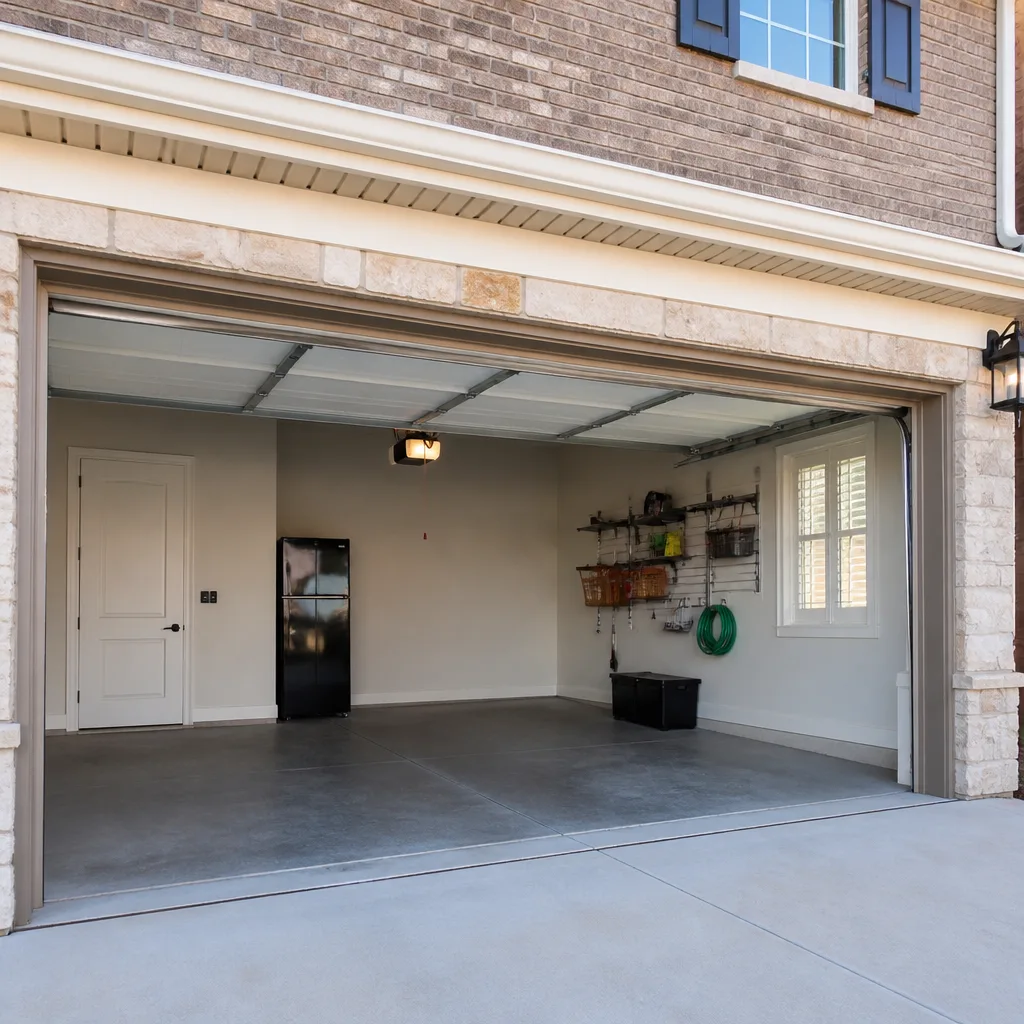 LiftMaster openers
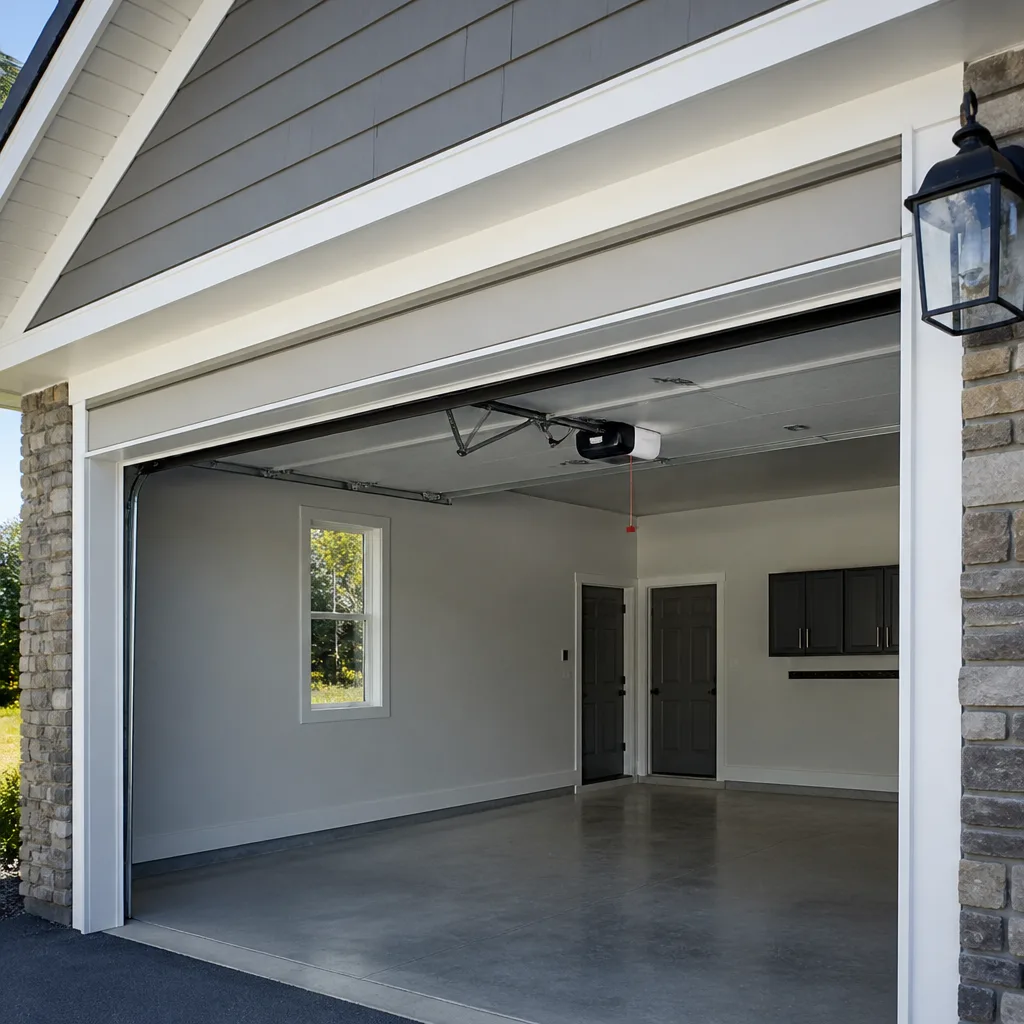 Chamberlain openers
Full 25-point door and opener safety check with every visit - springs, cables, rollers, tracks, and your LiftMaster or Chamberlain opener included
You get a price before we start. It does not change when the pro arrives.
Get your free estimateGarage Door Warning Signs: A Chesapeake Homeowner’s Reference Guide
Most garage door failures don’t happen without warning. They happen after months of warnings nobody acted on. The door that hesitates for two seconds before rising, the faint scrape you hear from the kitchen, the slight lean you notice when you pull into the driveway at night – these are the early signals, and they show up long before a door stops working entirely. Chesapeake humidity, summer heat, and older housing stock give our local doors a particular set of wear patterns, and knowing them turns a surprise emergency into a scheduled repair. This guide covers what to watch for, what each sound and symptom actually means, and how to tell cosmetic wear from something structural.
Quick Answer
The most important garage door warning signs in Chesapeake are asymmetric movement (one side lagging), a door that feels heavier to lift by hand, grinding or popping sounds during operation, visible gaps in the weatherstripping, and rust or swelling around hinges and panels. Any of these means a component is wearing and should be inspected by a trained technician. Signs involving a broken spring, a door stuck open or closed, or a frayed cable need same-day attention.
Styles & brands we work with
- Raised-panel steel
- Carriage house
- Modern flush
- Full-view glass
- LiftMaster openers
- Chamberlain openers
Table of Contents
- Cosmetic Wear vs. Structural Warning Signs
- Early-Stage Spring Wear Signals
- Humidity-Driven Warning Signs in Coastal Virginia
- The Balance Test: Detecting Spring and Cable Wear Early
- What the Sounds Are Telling You
- Opener Strain: The Signal Most Homeowners Miss
- Triage Guide: Schedule vs. Same-Day
- Common Mistakes and When to Call for Help
Cosmetic Wear vs. Structural Warning Signs
Cosmetic wear is surface-level. It doesn’t compromise how the door moves, seals, or holds weight. Structural wear affects the mechanics or safety of the door, even if it looks minor at first glance. The trick is telling them apart before a small mechanical issue becomes a bigger repair.
Cosmetic wear looks like:
- Faded paint or chalky finish on the door face, common on south-facing doors in Chesapeake where sun exposure is heaviest
- Minor scuffs on panels from bicycles or lawn equipment
- Small dents that don’t crease the panel edges
- A slightly dusty or dull track surface
Structural wear looks like:
- Dents that crease or buckle a panel edge, which can throw the door off balance
- Bent or bowed track sections, even slightly
- Sagging or separating hinges
- Rust around the bottom brackets or springs
- Weatherstripping that no longer contacts the floor evenly
- A door that sits crooked when fully closed
Cosmetic issues can usually wait. Structural ones can’t, because they compound. A slightly bent track puts extra load on the opener and uneven strain on the springs. A rusted hinge weakens the panel joint. What starts as a $100 fix becomes a full panel replacement or a spring failure if ignored for a season or two. In our experience, the doors that fail catastrophically in Chesapeake homes are usually the ones that showed structural wear for months before anything broke.
Early-Stage Spring Wear Signals
Springs don’t fail cleanly. They weaken gradually, and the door behaves differently for weeks or months before a spring finally breaks. Catching the early stage means replacing a single spring on a scheduled appointment rather than dealing with a door stuck halfway up and a car trapped inside.
Here’s what to look for:
- Asymmetric movement. Watch the door as it rises. If one side reaches the top a fraction later than the other, the spring on that side is under-performing. This is the earliest and most reliable sign of spring wear.
- Increased effort to lift. Disconnect the opener and lift the door by hand. It should rise smoothly and hold at roughly mid-height. If it feels heavy or drops, the springs are losing tension.
- A new gap at the top of the door when closed. Weak springs can’t pull the door fully closed or open, so the door rests a little short of where it used to.
- Visible gap in the spring coils. Look (from a safe distance, never touching) at the torsion springs above the door. A small gap between coils in a relaxed state often signals a spring on its way out.
- More frequent opener reversal or recalibration. LiftMaster and Chamberlain openers in particular recalibrate to accommodate weakening springs, so if yours is recalibrating more often, the springs are the place to look.
A safety word first. Garage door springs are under extreme tension. They can cause severe injury if handled by anyone other than a trained technician, and no amount of online instruction makes them safe to touch. The single most important thing to know is that spring repair is a licensed-professional job, not a DIY project. What you can do is watch and listen – and call the moment you notice a change. We handle dedicated garage door repair including spring work, so a weakening spring never needs to become a broken door.
Humidity-Driven Warning Signs in Coastal Virginia
Chesapeake sits in a humid subtropical climate, and that shapes how garage doors age here. Summer humidity lingers well into September, and the temperature swing between a hot afternoon and a cool night cycles the entire door structure dozens of times a season. Three specific problems follow:
Rust patterns
Rust on a garage door here is rarely random. It shows up first on the bottom brackets, hinges, and any unpainted fasteners – the parts closest to the concrete slab where moisture sits longest. Left alone, rust starts to pit the metal, then locks hinges and stiffens rollers. Watch the joints, not the broad panel faces.
Wood swelling and panel separation
Wood garage doors and older wood-framed openings swell in humid months and shrink in dry ones. The result is hairline cracks along panel seams and doors that suddenly stick in one spot. If your wood door jams most often in July and August, it’s not a track problem – it’s seasonal wood movement. A technician can adjust the track and strike the right balance so the door clears without dragging.
Weatherstripping compression loss
Rubber weatherstripping along the sides and bottom loses resilience faster in humidity, especially where the door meets the concrete. Once it flattens or cracks, water, insects, and outside air get in. Check for daylight under the door with the opener engaged, and look for stiff or crumbling seals along the jambs. Edge-seal problems are a five-minute check and a same-visit fix.
Above all, don’t dismiss a Chesapeake door that’s “always a little stiff in summer.” Seasonal sticking is a signal, not a personality trait. It’s telling you the track, springs, or seals need attention.
The Balance Test: Detecting Spring and Cable Wear Early
The balance test is the single most useful thing a Chesapeake homeowner can do to catch spring and cable problems before they become emergencies. It’s simple, safe when done correctly, and takes about a minute.
- Close the door fully. Make sure nobody is standing under or beside it.
- Disconnect the opener. Pull the manual release cord down and away from the door. For a LiftMaster or Craftsman opener, this is the red handle on the rail.
- Lift the door by hand to about waist height. Use both hands on the bottom section, lift slowly, and stop at roughly half-open.
- Let go gently. A balanced door holds position with maybe a few inches of drift. A door that drops means weak or broken springs. A door that rises on its own means springs are over-tensioned or a cable is bound.
- Lower the door slowly and reengage the opener. If anything felt wrong, don’t use the door until a technician looks at it.
What the results mean:
- Door holds steady – springs and cables are healthy.
- Door drifts down more than a few inches – spring tension is low; likely a single spring weakening.
- Door pulls upward – tension is off or a cable is failing.
- Door feels rough or catches – track, rollers, or a hinge issue in addition to springs.
A door that fails the balance test isn’t an emergency on its own, but it should be looked at soon. A door that’s drifted badly and then starts moving unevenly is one step from a broken spring. If your door also has opener issues on top of spring wear, we can tackle both in one visit with garage door opener repair.
Safety note: Never test or reach for a torsion spring or cable. The balance test is safe because it doesn’t require touching any of the tension components. Everything beyond that belongs to a trained technician.
What the Sounds Are Telling You
Garage doors are noisy by nature, but the character of the noise changes when something is wearing. Here’s what to listen for:
- Grinding – rollers or bearings. Metal-on-metal grinding usually means worn rollers or dry bearings. Common in Chesapeake homes where the door has been in service a while without hinge lubrication.
- Popping – torsion springs or cables. A single sharp pop can be the sound of a spring letting go, or a cable snapping loose. If you hear it and the door stops working, don’t run the opener again – call for same-day service.
- Squealing – rollers or hinges. High-pitched squealing is usually dry moving parts. Sometimes it’s just the rollers; other times the spring shaft bearings need attention. Lubrication is the first step, but persistent squeal means something has worn.
- Rattling – loose hardware or panels. Loose bracket bolts, sagging hinges, or separating panels rattle on every cycle. Left alone, loose hardware accelerates panel wear.
- Banging – opener or spring force. Loud banging at start-up and stop can mean the opener is over-torqued, the springs are imbalanced, or the door is out of adjustment.
A new noise deserves a closer look. The rule of thumb in our experience: if a sound is new in the last few weeks, it’s a signal; if you’ve heard it for a year, it’s a chronic problem that needs fixing.
Opener Strain: The Signal Most Homeowners Miss
Your garage door opener isn’t supposed to be strong. It’s supposed to be barely strong enough to lift a well-balanced door. When springs weaken, the opener has to work harder to compensate – and that’s where most hidden damage begins.
Signs the opener is under strain:
- The opener labors at the start of travel (a sort of grunt or hesitation) and races at the end
- The door reverses unexpectedly near the top or bottom
- Your Genie or Raynor opener flashes an error code you didn’t see before
- The opener motor feels noticeably hot after a single cycle
- The door jerks at mid-travel when there’s no visible obstruction
A Wayne Dalton or LiftMaster opener that’s straining isn’t necessarily the problem – it’s often the messenger. In most cases we diagnose, the opener is doing exactly what it should, but the door is no longer balanced, so the opener is compensating for a spring or track issue. Replacing the opener alone won’t solve a mechanical problem and will just wear the new opener. The right fix is to balance the door first, then assess the opener.
If you’re already noticing opener strain, it’s a good time to schedule a full look at the whole system. The best garage door installation decisions start from a clear diagnosis of what’s actually failing. We work on whatever brand is on your door, whether that’s Genie, Raynor, Chamberlain, or anything else.
- One real risk: A straining opener can strip a gear, burn out a motor, or – worse – override its safety reverse, which is a serious safety hazard around children and pets.
- One real opportunity: Catching opener strain early usually means a balance adjustment and a spring tune-up rather than a full opener replacement.
If you have a Wayne Dalton, LiftMaster, or any other brand showing strain, don’t wait until the opener quits. A door that quits mid-cycle is harder and more expensive to fix than one that gets adjusted while it’s still moving.
Triage Guide: Schedule vs. Same-Day
Not every warning sign is an emergency, and not every emergency started as one. Use this comparison to decide how quickly to act.
- Schedule a routine repair appointment: asymmetric movement in the door (small), a new scraping sound, one side of the weatherstripping flattened, mild rust on hinges, a door that sticks in summer humidity, a slow opener hesitation.
- Call for same-day service: the door is stuck halfway up or down, a torsion spring has snapped (audible pop, door won’t lift), a frayed cable is visible, the door drops within seconds when lifted by hand, or the opener is reversing without obstruction.
- Call for emergency service off-hours: the door is stuck open and you can’t secure the house, the door is jammed shut and you can’t get a vehicle out, a spring or cable failure has left the door hanging unevenly, or you hear metal popping and the door won’t respond to the opener.
In our experience, three out of four emergency calls we run began as a warning sign that had been on the door for weeks. The triage that matters most is time: the shorter the gap between the first symptom and the first inspection, the smaller the repair.
We run emergency garage door service as a core offering, not an afterthought, so if a door in Chesapeake fails at an awkward time you have a line to call. Garage Door Repair Chesapeake Pros handles the full range – repairs, opener fixes, spring work, and installation – so almost no job requires a second contractor.
Common Mistakes to Avoid
- Assuming “it always did that.” Doors don’t develop new noises or hesitation on their own. If you’re not sure whether the behavior is new, keep a small note of what you hear and see week to week. Change is the signal.
- Lubricating the torsion spring or track with the wrong product. Grease on the track attracts dust and grit – use the product the manufacturer recommends and never lubricate a torsion spring yourself.
- Ignoring a faint gap in the weatherstripping. In Chesapeake humidity, a small edge gap lets moisture in and turns into rust on the bottom brackets and a swollen wood panel over one wet summer.
- Repeatedly resetting the opener instead of investigating. A LiftMaster or Chamberlain opener that reverses or stalls is usually reporting a mechanical problem. Resetting it once is fine. Resetting it three times means something’s wrong with the door.
- Adjusting the springs yourself. This is the single mistake with the worst consequences. A torsion spring under tension can cause serious injury. There’s no safe DIY version of this repair.
- Choosing the cheapest quote without asking what’s covered. A cheap repair that doesn’t include balancing the door, checking cables, or testing the safety reverse leaves the real problem in place.
- Waiting until the door fails entirely. Doors that fail mid-cycle in Chesapeake homes are usually the ones that had visible warning signs for a month or two. A scheduled repair costs less than a broken door.
See the difference
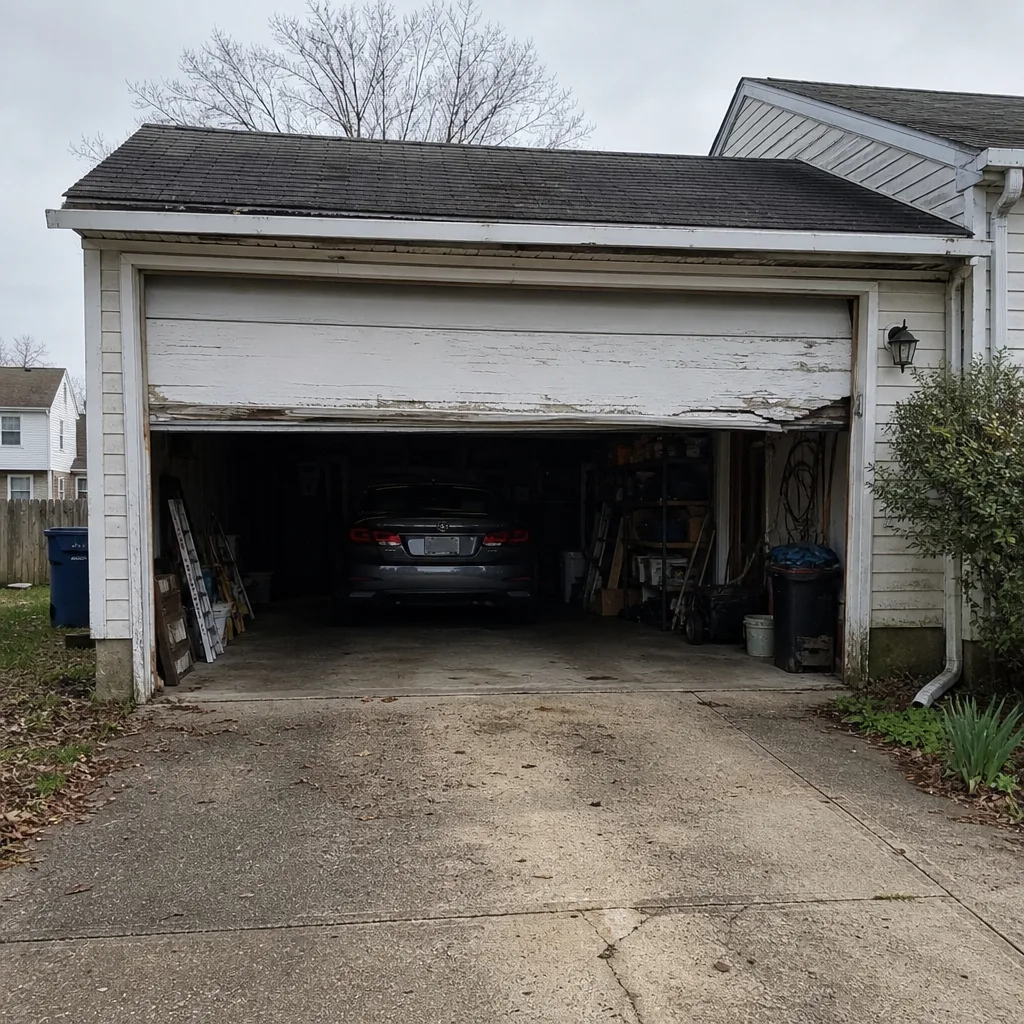 Before
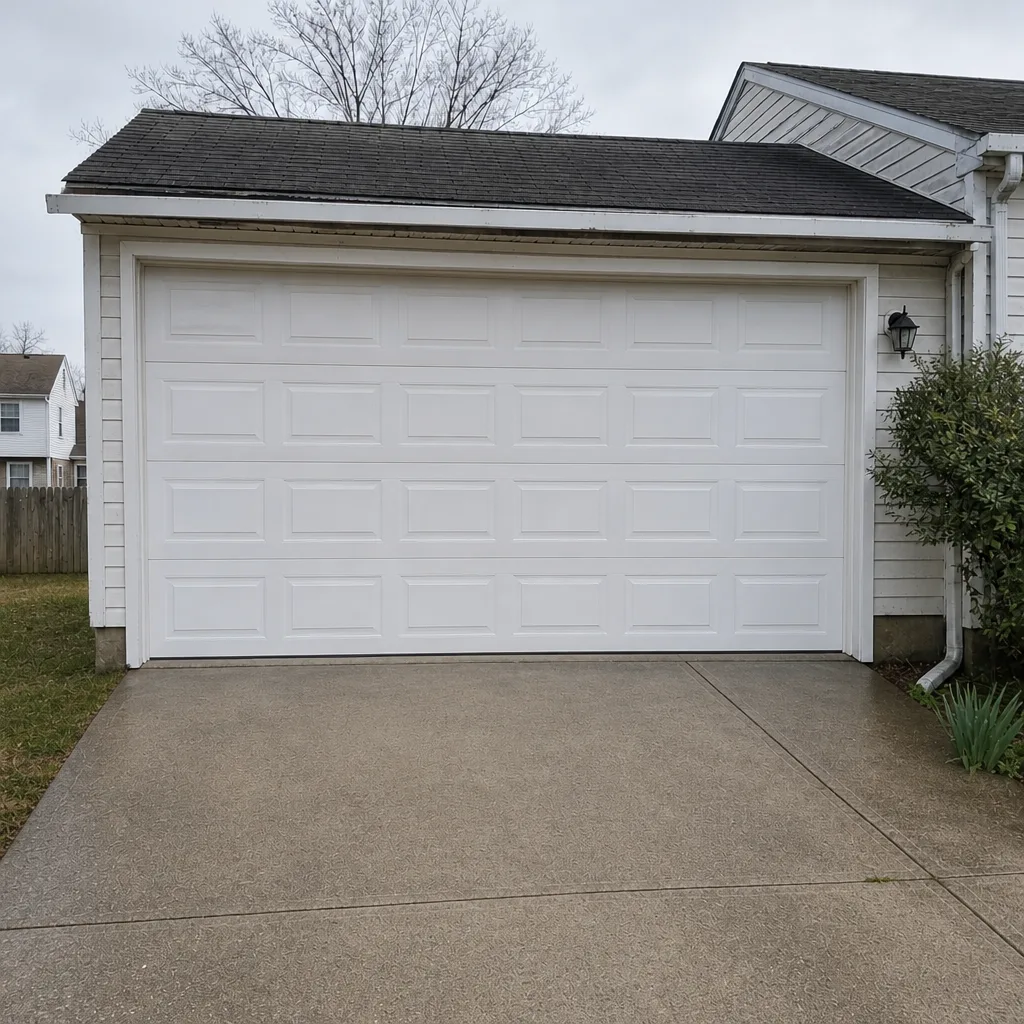 After
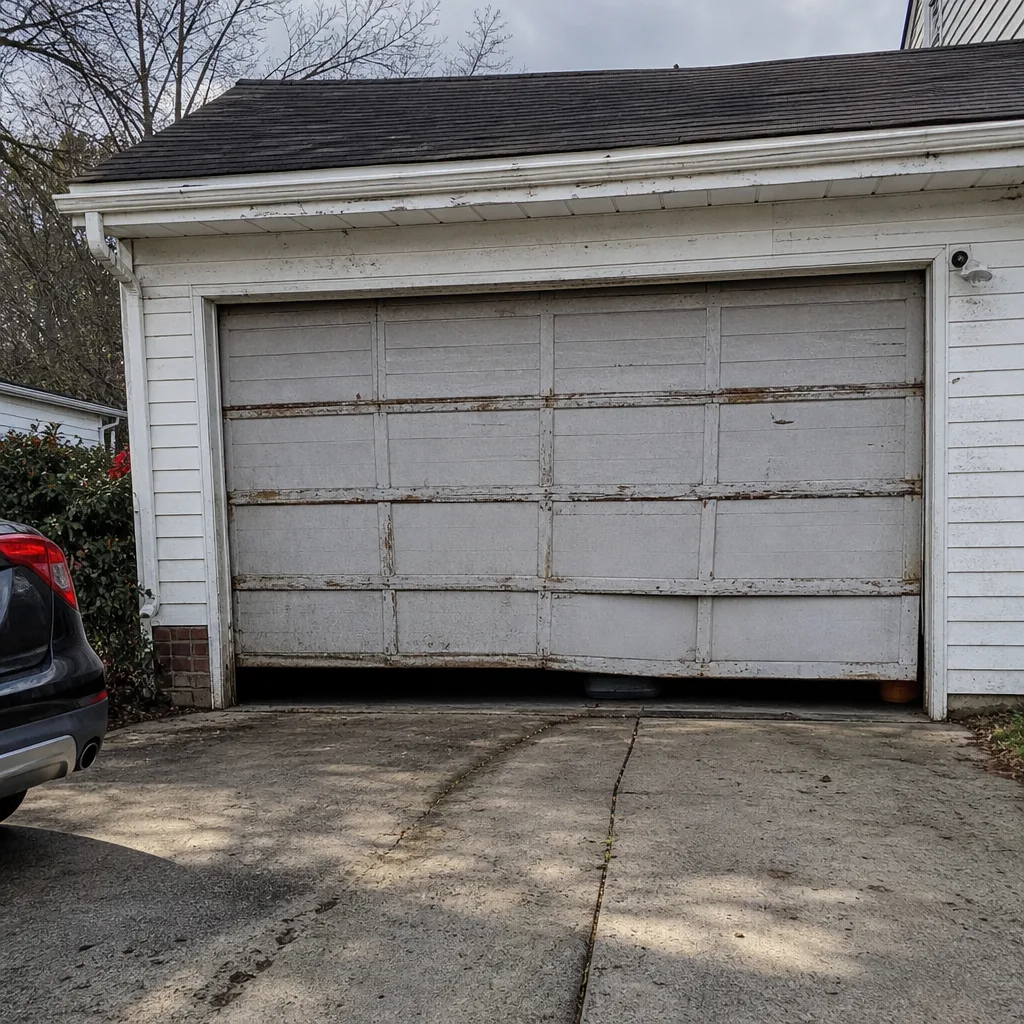 Before
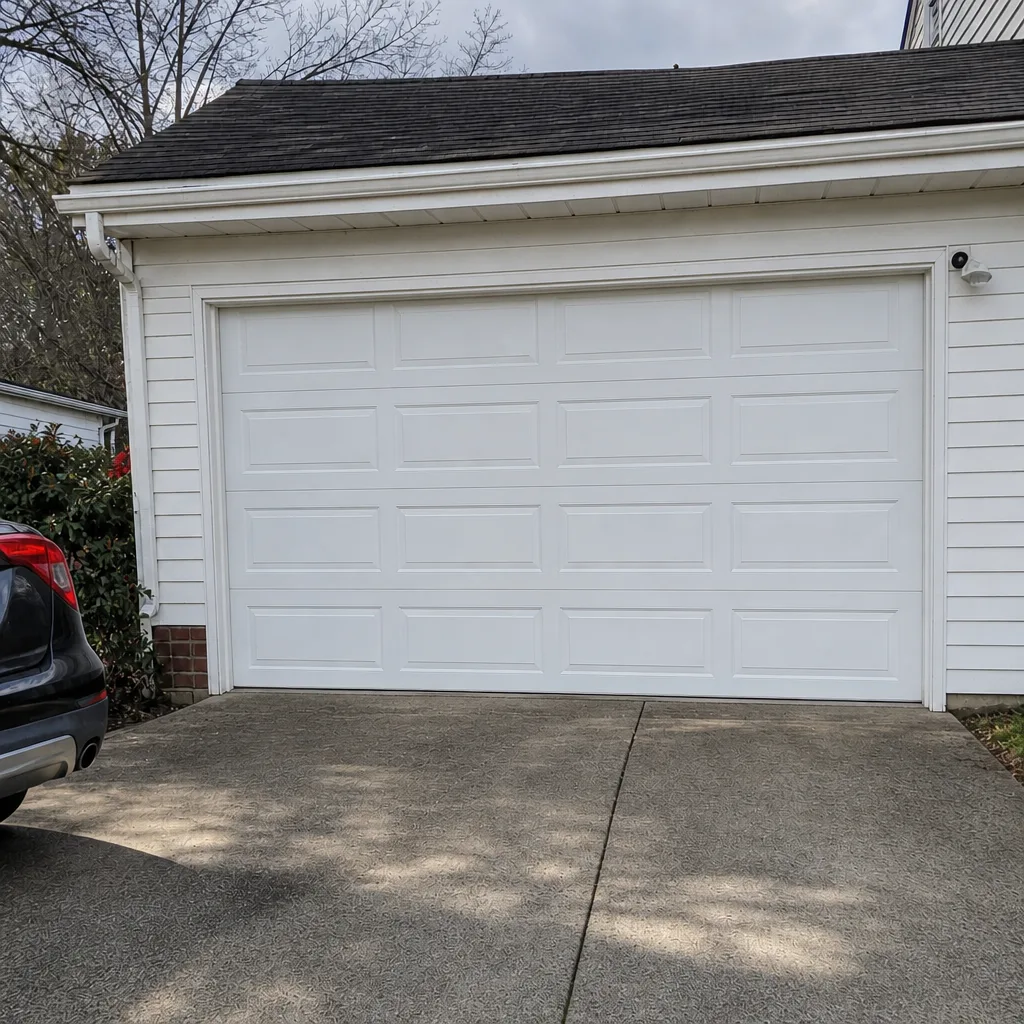 After
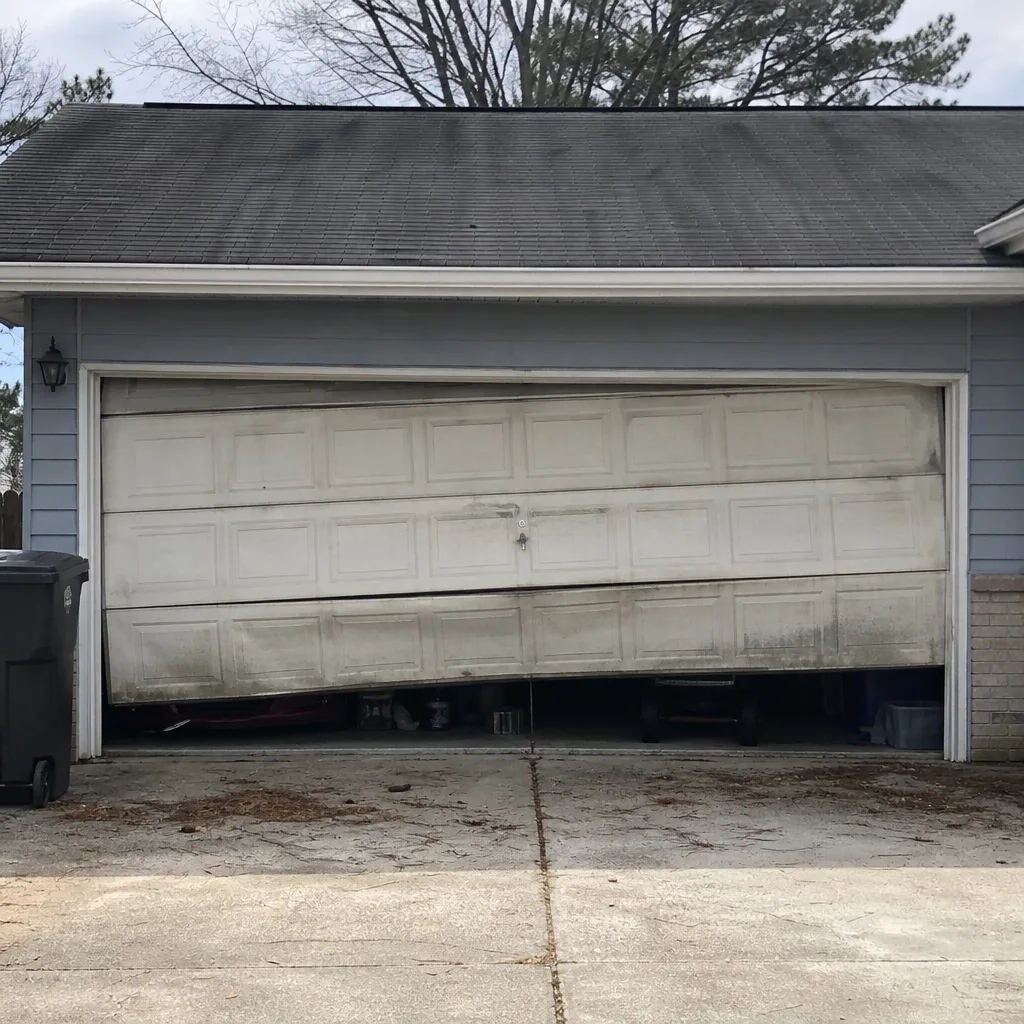 Before
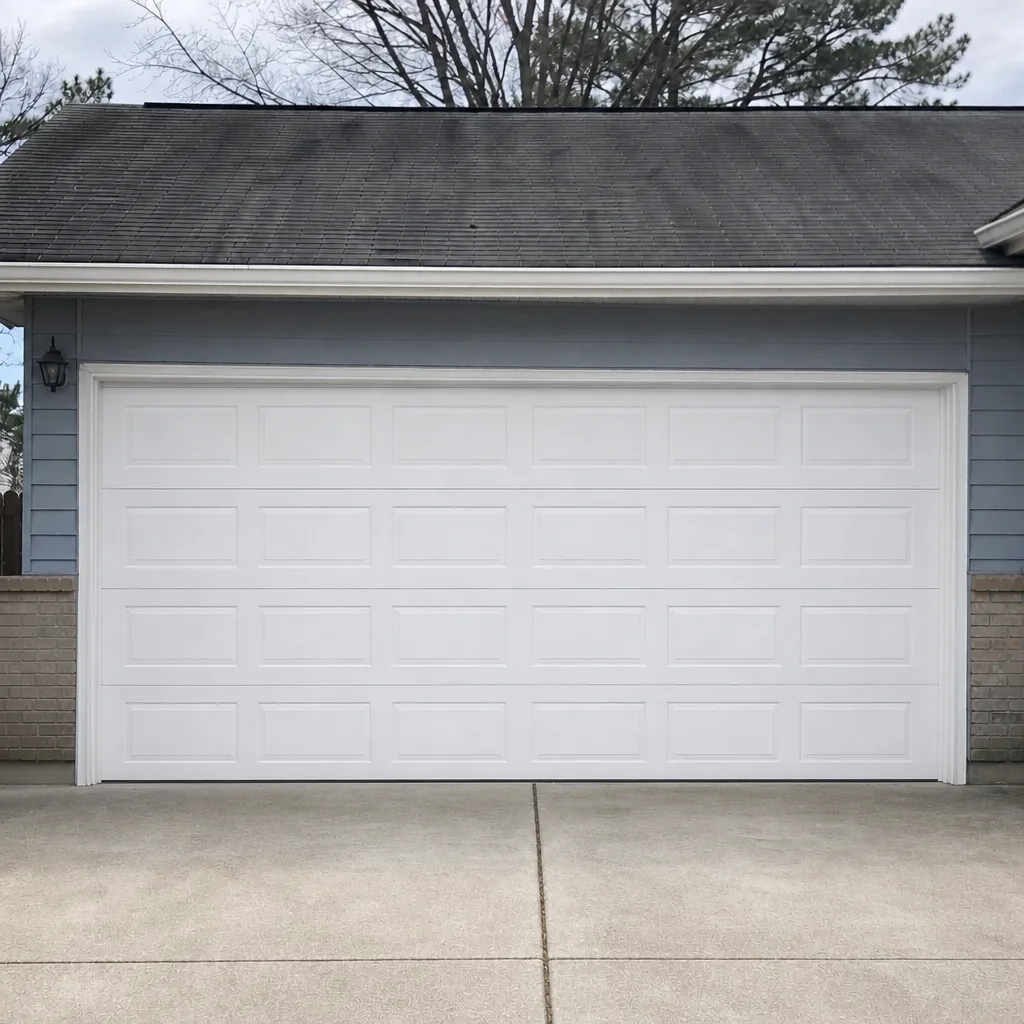 After
When to Call a Professional
Call a professional the moment you notice asymmetric movement, a snap or pop you can’t explain, a door that stays stuck or drops on its own, a frayed cable, a visible gap in the weatherstripping that’s been there season to season, or an opener that’s reversing more than once. Also call if you have a wood door that jams most of the summer, or any sign of rust on the bottom brackets or hinges. These are all points where a quick inspection and adjustment prevents a much bigger repair.
Our technicians have up to 8 years of experience and can work on the system already on your home – whether that’s Wayne Dalton, Raynor, LiftMaster, or anything else. Garage Door Repair Chesapeake Pros offers free estimates in Chesapeake – call (877) 745-2212. Every price is quoted and agreed before any work starts.
Frequently Asked Questions
Spring repair in Chesapeake typically runs $180 to $340 per spring, and about twice that when both springs in a matched pair are replaced together, which is usually the right call. The written estimate sets the final price. Call (877) 745-2212 for an exact quote – estimates are free.
Yes. If your door is stuck open, stuck closed, or a spring has snapped, we can often get a technician out the same day. We run emergency service off-hours as well, so a stuck door doesn’t leave your home exposed. Call (877) 745-2212 to book the soonest slot.
No. We quote and agree the price before any work starts, and the written estimate is the price you pay. If we find something additional, we won’t do any extra work without telling you first and getting your approval. Call (877) 745-2212 for a free estimate.
The local pro we connect you with is licensed and insured as Virginia requires. Our technicians have up to 8 years of experience on garage doors and openers, and we work across major brands including LiftMaster, Chamberlain, Genie, Clopay, Amarr, Wayne Dalton, Craftsman, and Raynor – whatever is on your home. Call (877) 745-2212 for a free estimate.
Chesapeake humidity swells wood door panels and stresses metal tracks, so a door that sticks in July and August is usually responding to seasonal movement, not just “getting old.” The fix is a track adjustment and a rebalance, not a new door. Call (877) 745-2212 to get it looked at before it becomes a bigger repair.
No. Torsion springs are under extreme tension, and a broken one is still dangerous to handle. Spring repair is a trained-professional job. The most useful thing you can do is keep the door closed and call (877) 745-2212 for same-day service.
The Bottom Line
Garage doors tell you what’s breaking long before they break. The earlier you respond to the first asymmetric movement, the first new grind, or the first summer that your door sticks, the smaller the repair. In Chesapeake, humidity, heat, and older doors make spring wear, weatherstripping compression, and rust on the bottom brackets the three most common early-warning signs to watch. A balance test every few months catches most of it. When something needs fixing beyond routine lubrication or a visual check, call a technician – springs and cables are never a DIY job. And if the door already fails the balance test, reverses twice, or won’t move at all, treat it as a same-day call, not a someday one.
If you’ve read this far and a symptom feels familiar, it’s worth a look. Call (877) 745-2212 for a free estimate. We handle repair, spring work, opener repair, installation, and emergency service – one call, full fix, whichever door is on your Chesapeake home.
Written by the team at Garage Door Repair Chesapeake Pros.