Last updated November 21, 2026
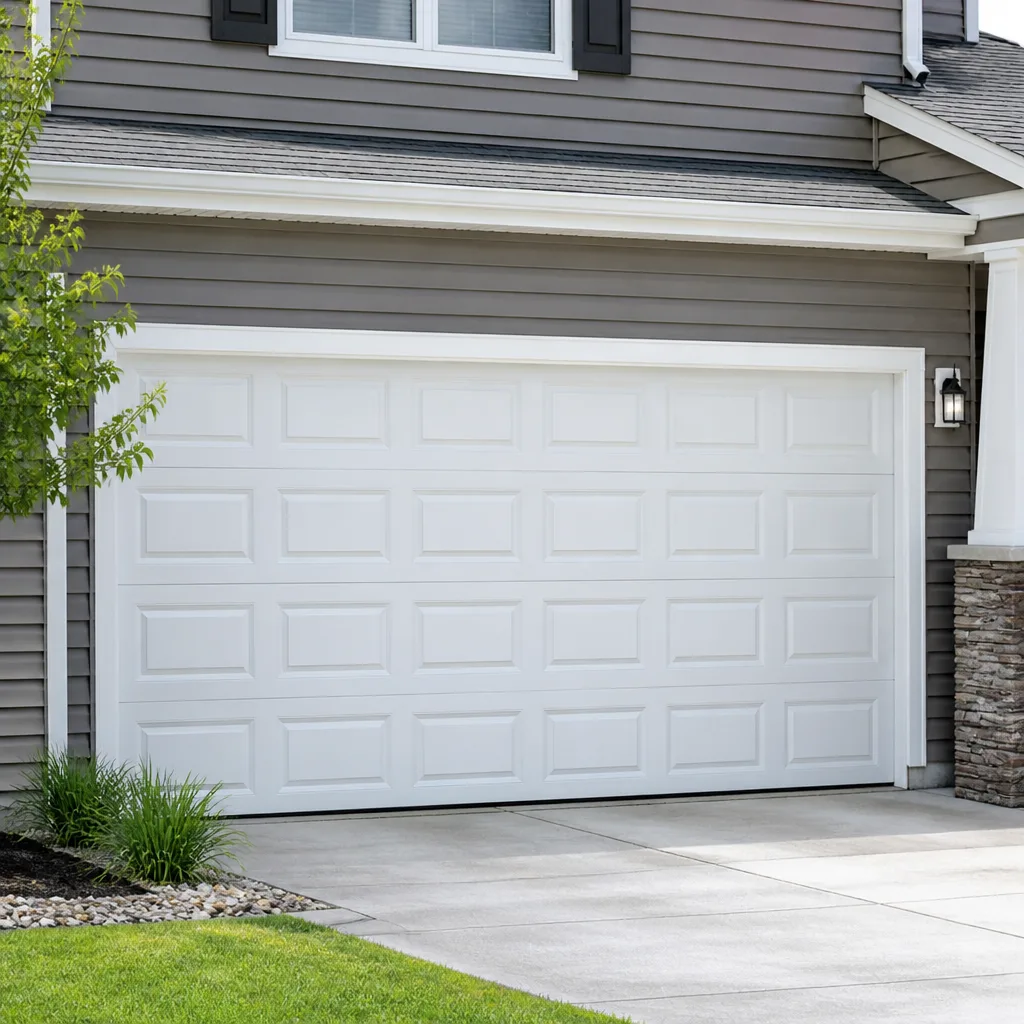 Raised-panel steel
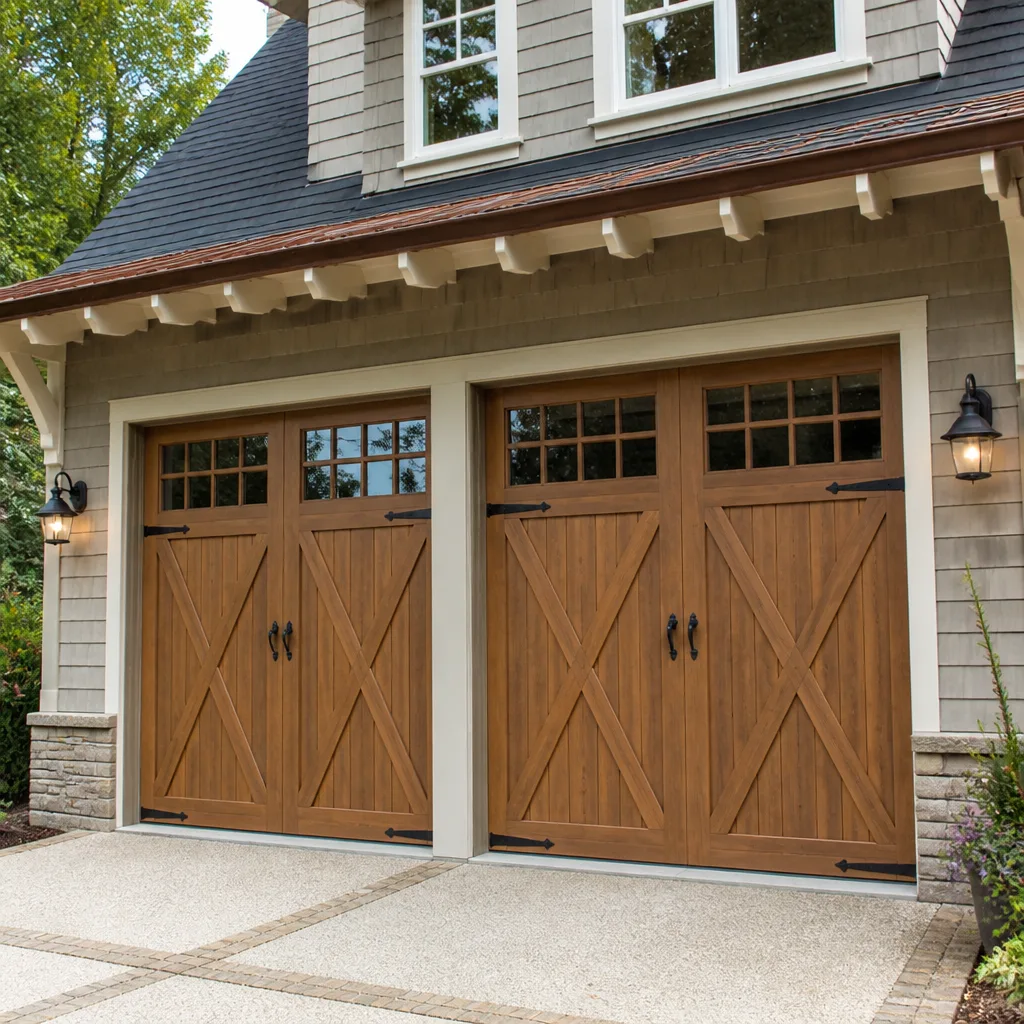 Carriage house
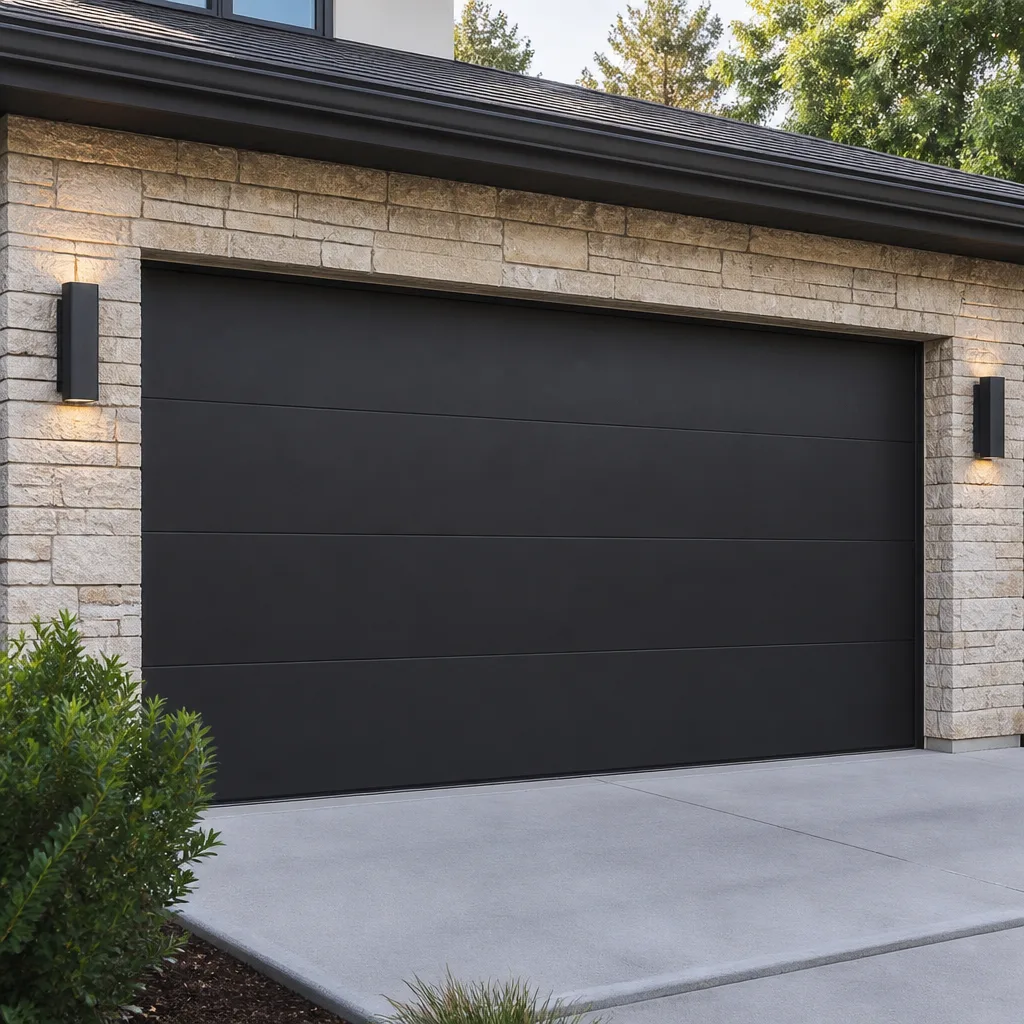 Modern flush
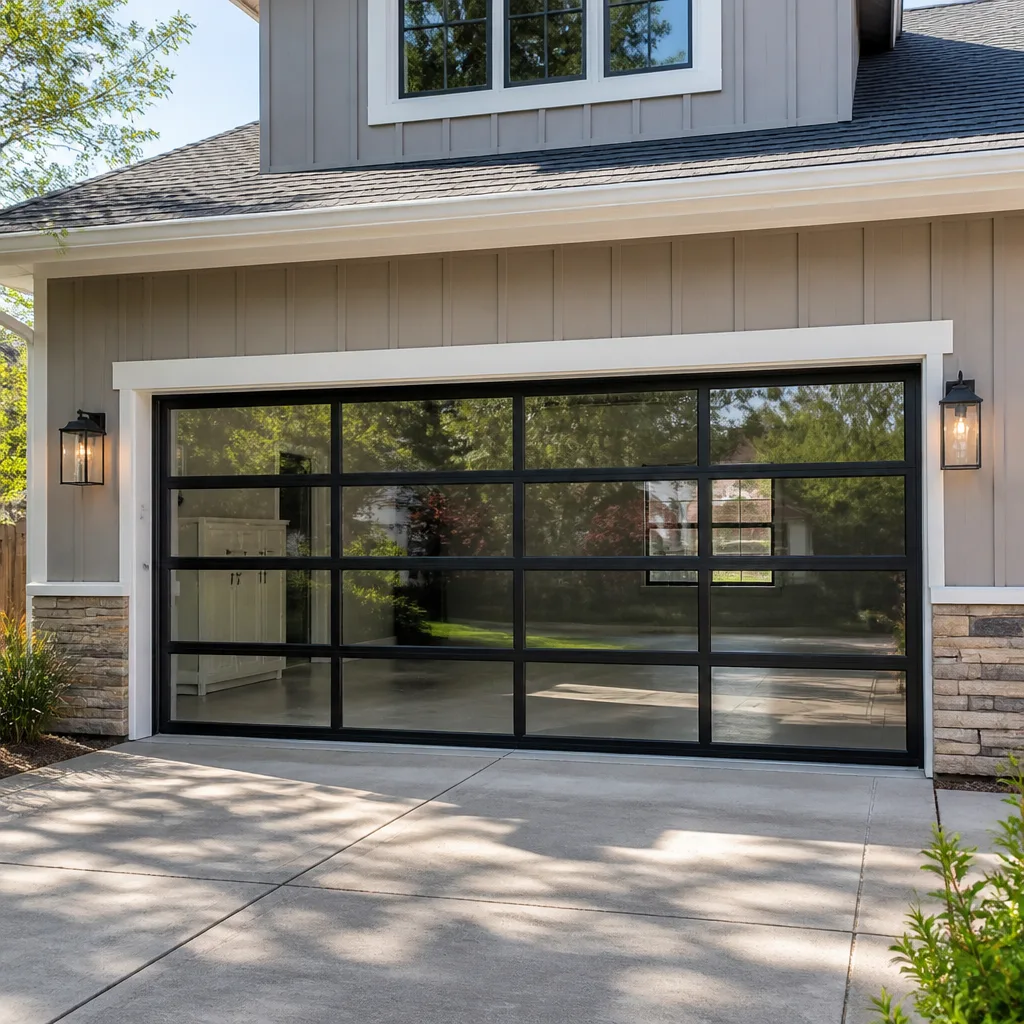 Full-view glass
 LiftMaster openers
 Chamberlain openers
Full 25-point door and opener safety check with every visit - springs, cables, rollers, tracks, and your LiftMaster or Chamberlain opener included
You get a price before we start. It does not change when the pro arrives.
Get your free estimateGarage Door Permits, Codes & Inspections in Chesapeake, VA: What You Need to Know
Here’s the part most homeowners never hear until it’s too late: in Chesapeake, a garage door replacement is not always a “swap it out and move on” job. Some replacements need a building permit. Some don’t. The line between the two depends on whether you’re keeping the opening the same or changing it, whether you’re adding an opener to a door that never had one, and what the door has to withstand on this part of the region. Get it right and the job closes clean. Get it wrong and it can follow the house all the way to the closing table. This guide walks through when Chesapeake wants a permit, what the Virginia code actually asks of a garage door, what an inspector looks at, and how to sort out a job that was done without one.
Quick Answer
Chesapeake generally requires a building permit when garage door work changes the door opening, adds a powered opener to a structure that didn’t have one, or installs a door that must meet a wind-load requirement. A straight like-for-like replacement, keeping the same size opening and the same door type, is often treated as ordinary repair and exempt – but the only definitive answer comes from the Chesapeake Building Department, and you should confirm before work starts. Pulling the permit and passing the inspection protects your insurance coverage and keeps the job clean at resale.
Styles & brands we work with
- Raised-panel steel
- Carriage house
- Modern flush
- Full-view glass
- LiftMaster openers
- Chamberlain openers
Table of Contents
- When does Chesapeake require a permit for garage door work?
- What Virginia’s building code asks of a garage door
- Wind-load ratings and why they matter here
- Who pulls the permit: you or the contractor?
- What happens at a garage door inspection
- How an unpermitted job surfaces at resale
- How to fix an unpermitted garage door job
- Common mistakes to avoid
When Does Chesapeake Require a Permit for Garage Door Work?
Chesapeake requires a permit when the work changes the structure or the door’s performance requirements, and typically does not when you’re replacing like with like. That’s the short version. The longer version is where most homeowners get tripped up, because “replacement” covers a wide range of jobs.
Think of it as two buckets. In the first bucket are jobs that alter the opening or its performance: enlarging or reducing the rough opening, converting a manual door to a powered one, installing a door that has to meet a specific wind-load rating, or changing the header or framing above the door. These are structural or code-driven changes, so the city wants to see plans and inspect the result.
In the second bucket are jobs that restore what’s already there: a same-size panel swap, a new door of the same type and dimensions in the same opening, spring or cable repair, and track or roller replacement. These are usually handled as repairs.
Here’s the caveat that matters. “Usually” is doing a lot of work in that sentence. Chesapeake’s building department has the final say on any specific address, and the answer can shift based on the age of the structure, the zone the home sits in, and whether the door is attached to a garage that shares a wall with living space. Before you order a door – and definitely before a crew shows up – call the city and describe the job in plain terms. Ask one direct question: “Does replacing this door at this address require a permit?”
If you’re weighing a full replacement rather than a repair, our guide to garage door installation covers what the job involves from measure to final adjustment, and it’s worth reading alongside this one so you understand both the permit side and the install side.
The like-for-like rule, in practice
A like-for-like replacement means the new door matches the old one in size, material, and operating type. Same width, same height, same sectional or tilt design, same manual or powered operation. When those four things line up and nothing about the opening is changing, most jurisdictions – Chesapeake included – treat the work as a repair rather than new construction.
The moment any of those four changes, treat it as a permit job until the city tells you otherwise. Adding a powered opener to a door that never had one is the one homeowners miss most often. It feels like an accessory install, but it changes how the door is operated and what safety features have to be present, and that’s exactly the kind of change a permit exists to track.
What Virginia’s Building Code Asks of a Garage Door
Virginia regulates construction through the Virginia Uniform Statewide Building Code, and garage doors fall under its structural and safety provisions. You don’t need to read the code yourself to understand what it’s after. The code exists to make sure a garage door stays attached to the house, closes safely, and doesn’t create a hazard for the people living behind it.
For a homeowner, the practical requirements break down into a few areas:
- Attachment and anchorage. The door, tracks, and spring assembly have to be fastened to sound framing in a way that carries the door’s weight and operating forces. A door hung on weakened or rotted framing in an older Chesapeake home is a real failure point, and inspectors look for it.
- Wind-load performance where it applies. Doors in areas subject to wind requirements have to be rated and installed for the load they’ll see. We cover this in the next section.
- Safety features on powered doors. An automatic door operator needs the standard safety provisions – an entrapment-protection reversal and, where the code calls for it, a photoelectric safety eye at the opening.
- Fire separation. Where the garage shares a wall or ceiling with the living space, the separation between them has to be maintained. A door installation that disturbs that separation needs to restore it.
The code doesn’t care which brand is on your door. Whether it’s an Amarr or a Wayne Dalton, the requirements are about installation and performance. We work on the system that’s on your house, not a preferred brand, and that goes for permit-driven replacements: the door you want is the door we’ll install, provided it meets what the code asks for at your address.
One thing to note about permits and code in Chesapeake: the person who can give you a definitive answer about a specific address is the city’s building department, not a contractor and not a guide like this one. Use this page to know what to ask. Use the city to get the ruling.
Wind-Load Ratings and Why They Matter Here
This is the section reason enough to pull a permit on a door replacement in Chesapeake. Some parts of the region sit in areas where garage doors have to meet a wind-load requirement, which means the door you install has to be rated to resist a specific pressure and installed to that rating. A door that meets the rating on paper but is fastened with the wrong anchors or missing the reinforcement brackets doesn’t meet it in reality.
Wind-load rating is not something you eyeball. It comes from the manufacturer’s engineering data for a specific door model and size, paired with the installation method. If the door is rated but hung with the wrong hardware, the rating is void – and an inspector who knows what to look for will catch the difference between a rated door installed correctly and a rated door installed casually.
A few practical points:
- Ask whether the address is in a wind-borne zone. A single call to the Chesapeake Building Department answers this for your specific property.
- Get the rating documentation with the door. A manufacturer’s wind-load documentation should travel with the job and be available at inspection. If your installer can’t produce it, that’s a warning sign.
- Match the installation to the rating. Reinforcement struts, specific anchor spacing, and bracket details all factor in. The spec sheet tells you what the door needs to achieve its rating.
- Keep the paperwork. Store the door spec, the rating documentation, and the permit and inspection record together. It’s the file you’ll want when you sell the house.
If wind rating is a factor for your address, that also pushes the job into permit territory in most cases. New door, new rating, new installation method – the city wants to see it. That’s something to work out before the door is ordered, not after.
Who Pulls the Permit: You or the Contractor?
The permit can be pulled by the homeowner or by the contractor doing the work, and the choice affects who carries the liability. This is the section where a lot of Chesapeake homeowners make a quiet mistake without realizing it.
When you pull the permit yourself as the homeowner, you’re the permit holder. You’re the one the city is dealing with, you’re responsible for making sure the work matches the permit, and you’re on the hook for scheduling the inspection. That’s fine if you’re doing the work or closely managing it. It gets awkward when a contractor does the work and something about it doesn’t pass: the city’s record shows you as the responsible party, and the contractor has less of a stake in the outcome.
When the contractor pulls the permit, the contractor’s name is on the record. That contractor is responsible for scheduling the inspection, being present, and correcting anything the inspector flags. The liability sits where the work sits. For most homeowners, that’s the arrangement you want.
Our recommendation: ask before the job starts, and get the answer in writing. The right questions are simple:
- Will you pull the permit, or am I pulling it?
- Whose name goes on the permit and the inspection record?
- Who schedules the inspection, and who meets the inspector on site?
- If the inspection turns up a correction, who handles it and who pays?
A contractor who pulls permits as a matter of practice will answer these without hesitation. A contractor who suggests you pull it “to save time” deserves a follow-up question about why.
If you’re managing a repair rather than a replacement – a broken spring, a door off its track, an opener that won’t respond – permits usually don’t enter the picture. Those jobs are handled through our garage door repair service.
What Happens at a Garage Door Inspection
A garage door inspection is a walk-through with a city inspector who confirms the installed door matches the permitted scope and meets the code requirements that apply. It’s usually brief – often under a half hour – and it’s specific. The inspector isn’t grading your paint job. They’re checking the structure and the safety systems.
Here’s what typically gets checked:
- The door matches the permit. Same size, same model or a model that meets the same performance spec, same operating type. If the door on the house isn’t the door on the paperwork, that’s an immediate issue.
- Attachment and framing. The tracks and spring assembly are securely fastened to sound framing. The inspector will look at the wood behind the brackets as closely as the brackets themselves.
- Wind-load documentation where required. If the job is in a wind-load zone, the door and the installation method need to line up with the rating documentation.
- Safety reverse on a powered door. The inspector may test that the door reverses when it meets an obstruction, and that the photoelectric safety eye is in place and functional where required.
- Fire separation. If the garage shares a wall or ceiling with living space, the inspector confirms the separation is intact after the work.
- The balance and operation of the door. A door that binds, hangs, or operates roughly can raise questions about the installation. It shouldn’t have to be dragged open by hand.
How to pass? The simplest answer is to make sure the paperwork and the installation match, and that everything works. A properly installed door passes because it was installed properly, not because anyone prepped for the inspection. If a correction does get flagged, it’s usually a small thing – a missing bracket, a safety eye that needs adjustment – and the contractor who pulled the permit handles it.
For a powered door, the opener side of the inspection overlaps with what our garage door opener repair work covers every day: safety reverse, force settings, and the eye. If your opener is a LiftMaster, Chamberlain, Genie, or Craftsman, we know those systems well enough to know what the inspector is going to check.
How an Unpermitted Job Surfaces at Resale
An unpermitted garage door replacement most often surfaces during a home sale – not immediately, and not from the city. It surfaces when a buyer’s inspector or title search looks at the property record and finds a permitted job that was never closed out, or a job that should have had a permit and doesn’t.
What happens next follows a predictable path:
- The buyer’s inspector flags it. Home inspectors are trained to spot door and opener work that looks newer than the permit history suggests. A clean, recent-looking installation with no permit record is exactly the kind of thing that gets noted.
- The buyer asks for documentation. Now you need to produce a permit and an inspection record for a job that was never permitted. If you can’t, you own the problem.
- The closing gets held up. Depending on the buyer’s lender and tolerance for risk, an unresolved permit issue can delay or complicate closing until it’s sorted out.
- You remediate, sometimes at your cost. Getting a permit after the fact, arranging an inspection, and correcting anything that fails becomes your job – and it’s happening under a deadline.
The insurance angle matters here too. Homeowner’s insurance is written around the property as it’s recorded and built. A substantial garage door replacement that was never permitted and inspected can create a coverage question if something goes wrong later. The exact coverage outcome depends on the policy and the circumstances, but the safest posture is the one where the job was permitted and inspected when it was done. That record is your protection.
Chesapeake has plenty of homes where the garage was finished or modified at some point, and over time the paper trail gets fuzzy. If you’re not sure whether previous garage door work on your house was permitted, that’s a question worth asking the city before you sell – not after.
How to Fix an Unpermitted Garage Door Job
An unpermitted garage door job can usually be fixed, and the path is more routine than it sounds. The process is called permitting after the fact, and the city will walk you through it. It’s not free, and it’s not instant, but it’s ordinary work for a building department.
The typical sequence looks like this:
- Call the Chesapeake Building Department. Describe the work that was done, when it was done, and the current condition of the door. Ask what they need from you to bring it into compliance.
- Submit an application for the existing work. The city may want photos, the door spec, and documentation of the installation. They’ll tell you what’s required.
- Have the installation reviewed. This may mean an inspector walks the job, or a contractor inspects and confirms the installation meets code. Any deficiencies get identified here.
- Correct what needs correcting. Fasteners, brackets, safety reverse, missing documentation – whatever the review flags gets fixed.
- Pass the inspection and close the record. Now there’s a permit and an inspection record on the property, and the problem is gone.
Cost depends entirely on what the city requires and what condition the installation is in. A clean install that just needs the paperwork handled is a modest expense. An install with real problems – improper attachment, no safety reverse, a door that doesn’t meet wind-load requirements – can run higher because the work to correct it is real work. Get an estimate before you commit, and get it in writing.
If you’re about to buy a Chesapeake home and the garage door looks new but no permit shows up, ask the seller to handle it before closing. It’s a straightforward ask, and a seller who pulled the permit originally can usually produce the record quickly.
Common Mistakes to Avoid
- Assuming “it’s just a replacement” means no permit. It usually does mean that – but only when everything about the door stays the same. Add an opener or change the opening size and it’s a different job.
- Letting the contractor hand you the permit to pull. If you pull it, you carry the liability for the work, and the contractor’s name never appears on the record. Ask for the contractor’s name on the permit before the work starts.
- Ordering the door before confirming the wind rating. In Chesapeake, a door that doesn’t meet the required rating for the address is the wrong door, no matter how good it looks. Confirm the requirement first, then order.
- Throwing away the door spec and rating documentation. That paperwork is what gets you through the inspection and what protects you at resale. Keep it with the permit record.
- Skipping the safety check on a new opener. A powered door needs working safety reverse and, where required, a photoelectric eye. New opener installs that skip this fail inspection and create a real safety hazard.
- Handling the garage door yourself. Spring and cable work on a garage door is genuinely dangerous, and it’s one of the repairs that gets attempted too often and gone wrong. That’s a job for a trained technician, full stop.
- Waiting until closing to sort out an old permit. If you think a prior owner replaced the door without one, ask the city now rather than during a sale. It’s cheaper and less stressful to fix on your schedule.
See the difference
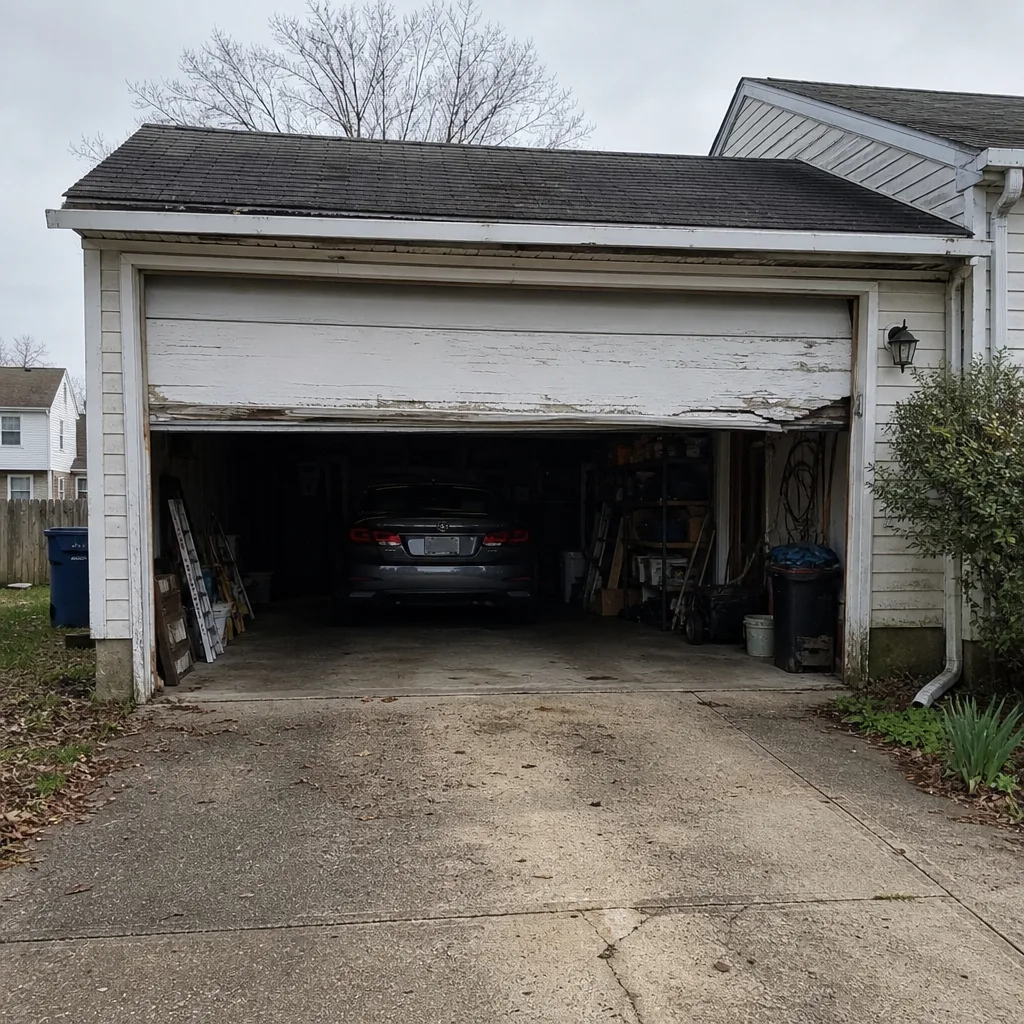 Before
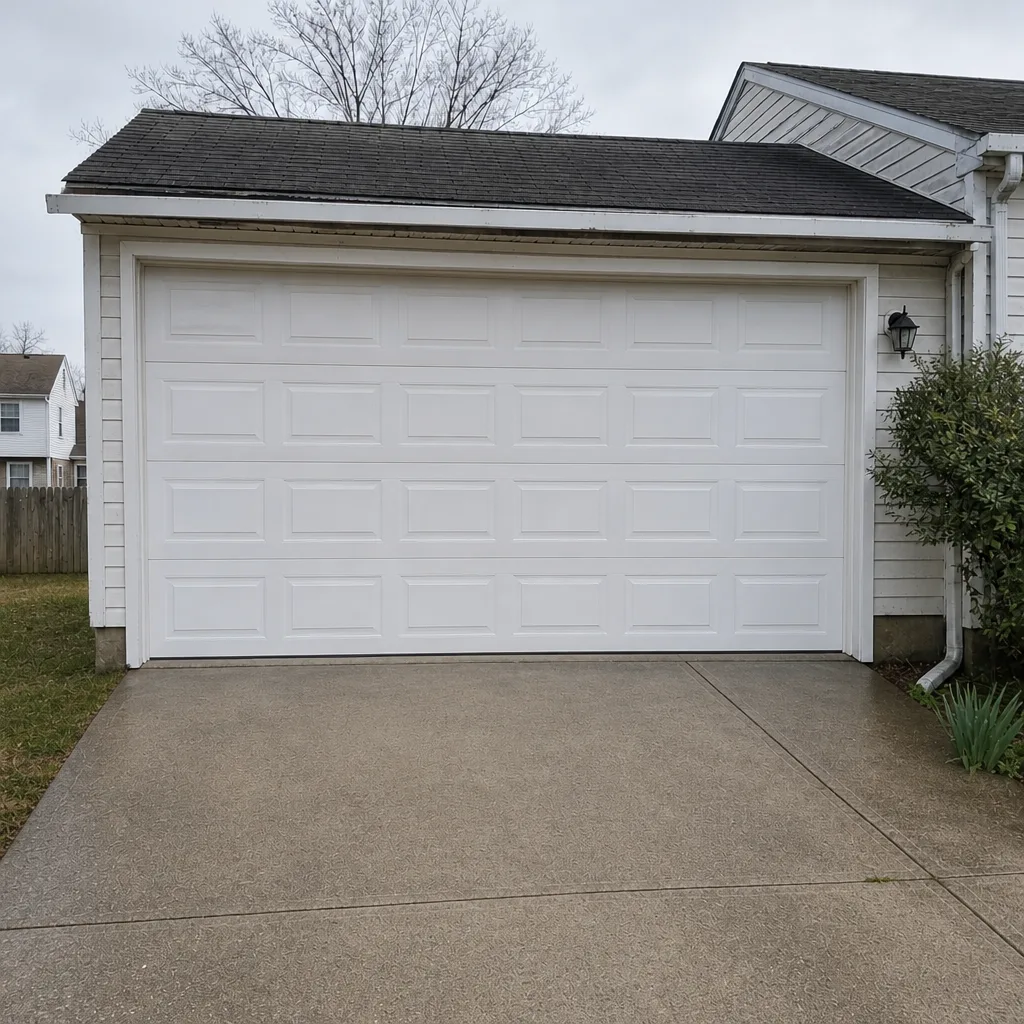 After
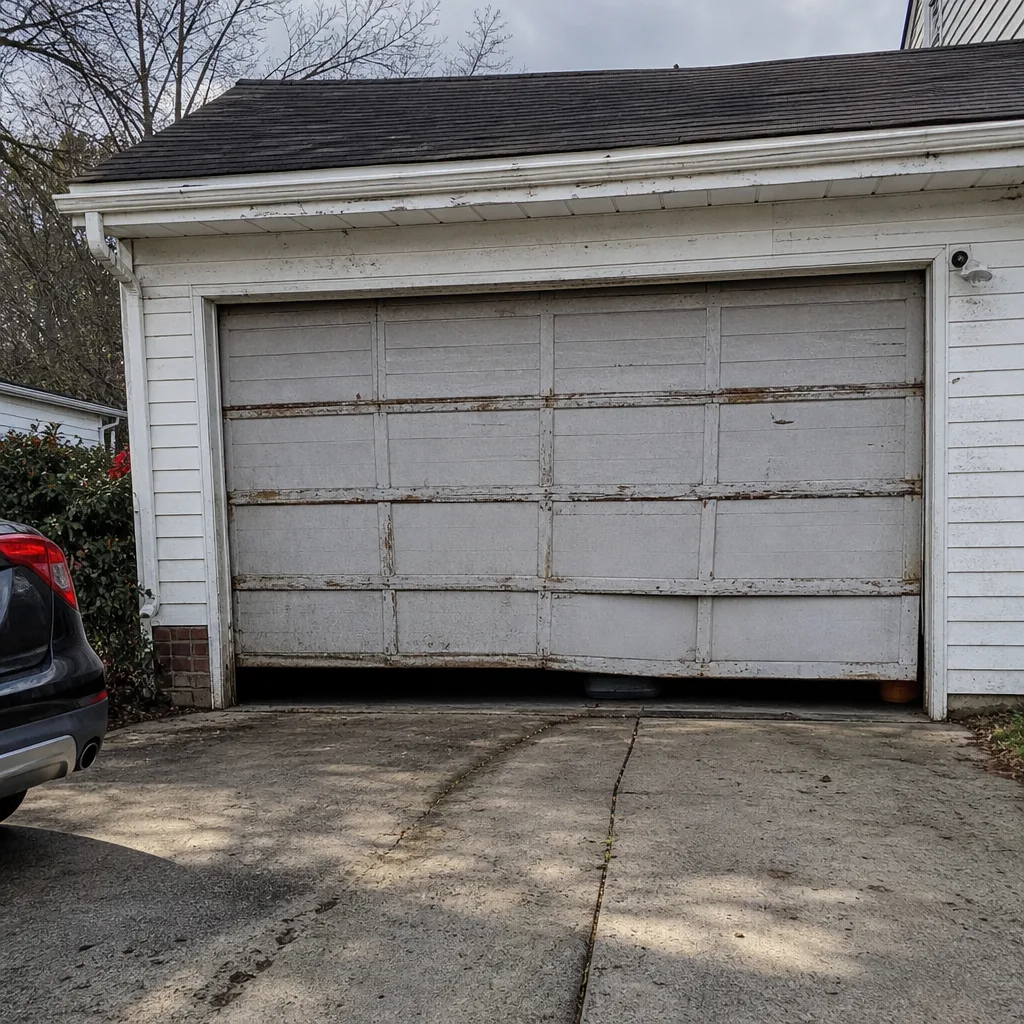 Before
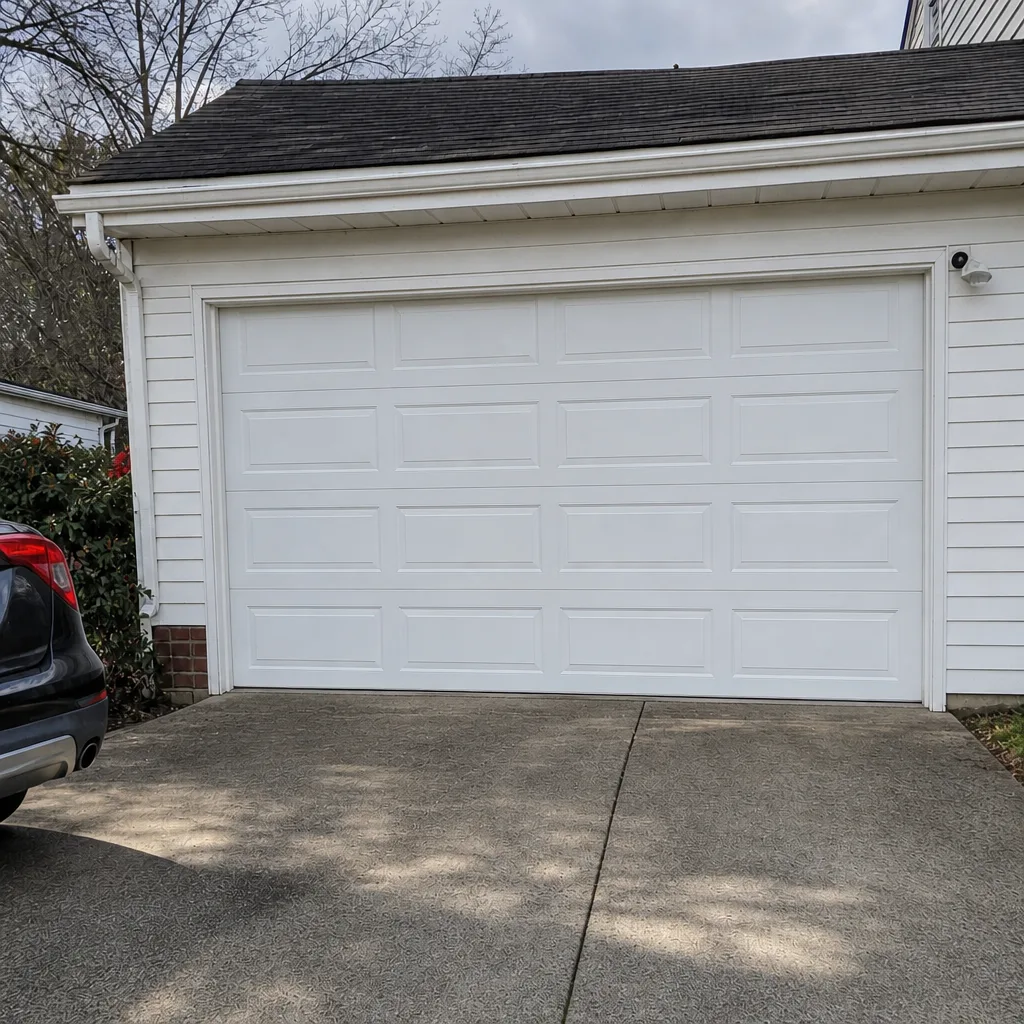 After
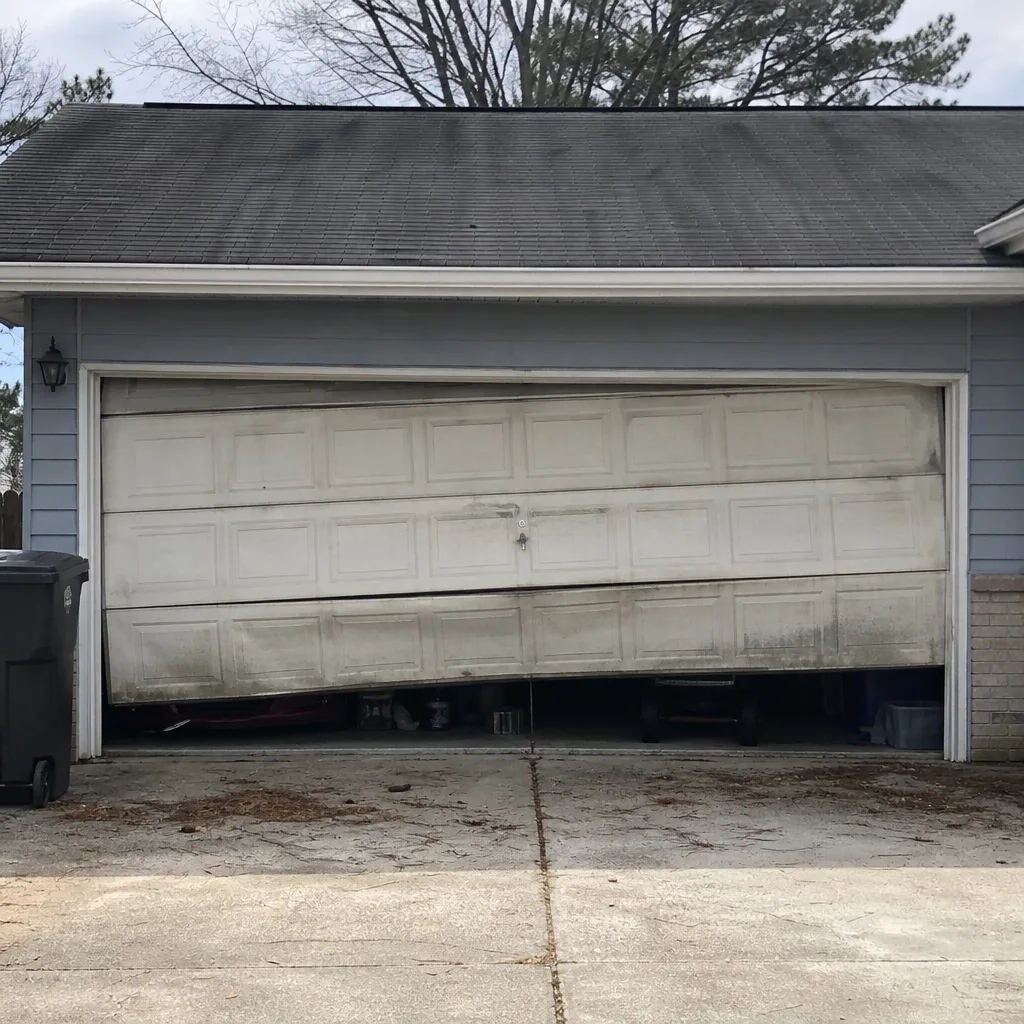 Before
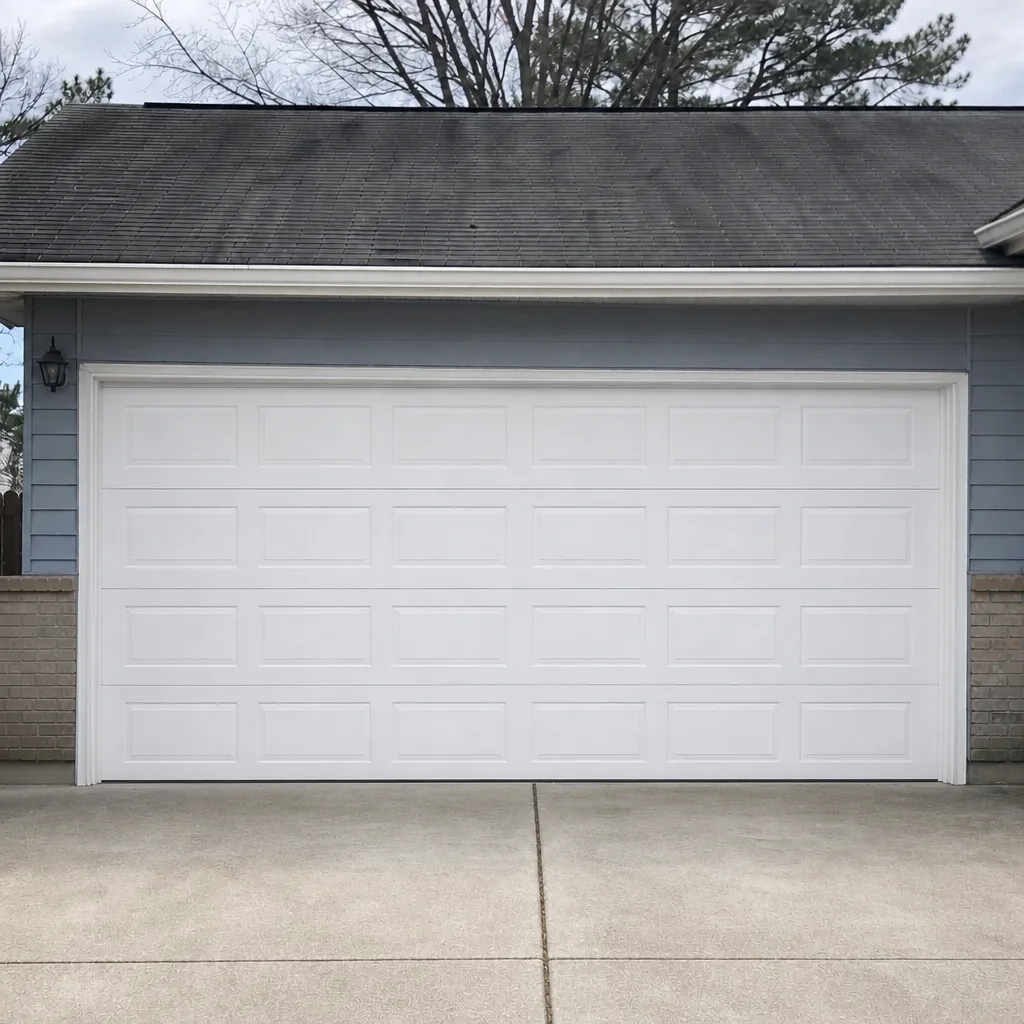 After
When to Call a Professional
Some parts of a garage door job are permit paperwork. Some parts can hurt you. Anything involving the springs, cables, or the torsion assembly falls firmly in the second category – springs store enormous energy, and the work requires specific tools, training, and an understanding of how the assembly is supposed to be tensioned. A door that’s off balance, binding, or dropping on one side points to that assembly. Keep away from it, and call a technician. The same goes for a door in a heavily loaded state that’s detached from the track, or an opener that’s running but not reversing on obstruction.
Garage Door Repair Chesapeake Pros offers free estimates in Chesapeake – call (877) 745-2212. Our technicians have up to 8 years of experience, and we handle the full scope under one roof: repair, opener work, spring repair, installation, and emergency service when a door won’t cooperate. If your project involves a permit decision, we’ll help you work out what the city needs and make sure the door we install matches the paperwork.
Frequently Asked Questions
You need a permit if the work changes the door opening, adds a powered opener to a door that didn’t have one, or installs a door that has to meet a wind-load requirement. A same-size, same-type replacement is usually treated as a repair and exempt. Confirm with the Chesapeake Building Department for your specific address before ordering the door – the answer depends on the property.
Skipping the permit leaves no inspection record on the property, and that record is what protects your insurance coverage and your sale. An unpermitted job can surface during a home inspection or title search and hold up a closing until it’s fixed. The fix – permitting after the fact and passing an inspection – is doable, but it’s easier and cheaper to do it right the first time.
Yes, and in most cases you should let them. When the contractor pulls the permit, their name is on the record and they carry the responsibility for scheduling and passing the inspection. When you pull it yourself, the liability sits with you even though someone else did the work. Ask who’s pulling the permit before the job starts, and get it in writing.
An inspection confirms the door matches the permit and meets the code for your address. The inspector checks attachment and framing, wind-load documentation where it applies, safety reverse and the photoelectric eye on a powered door, fire separation, and that the door operates smoothly. A properly installed door passes without any prep work beyond making sure the paperwork matches the installation.
Some do, depending on where the property sits. Virginia’s building code applies wind-load requirements in areas subject to them, and a garage door in those areas needs to be rated for the load and installed to that rating. The rating on paper doesn’t count if the installation method doesn’t match the spec. One call to the Chesapeake Building Department answers this for your address.
It depends on the city’s requirements and what condition the installation is in. A clean install that just needs the permit record handled is a modest expense. An install with real problems – improper attachment, missing safety reverse, a door that doesn’t meet wind-load requirements – runs higher because the corrections are real work. Get the estimate in writing before you commit; the written estimate is the price you’ll pay.
The Bottom Line
Most garage door replacements in Chesapeake don’t need a permit. The ones that do – changing the opening, adding a powered opener, installing a door that has to meet a wind-load requirement – are exactly where skipping the paperwork creates problems later. Pull the permit, put the contractor’s name on it, keep the documentation, and let the inspection confirm the installation. That record is what protects your insurance and your sale. And when the job involves springs, cables, or an opener that’s acting up, keep clear of it and call a professional. Garage Door Repair Chesapeake Pros handles the full range: Garage Door Repair Chesapeake Pros for repairs, openers, springs, installation, and emergency calls. Call (877) 745-2212 for a free estimate, and let’s get your Chesapeake door done right.
Written by the team at Garage Door Repair Chesapeake Pros.