Last updated November 21, 2026
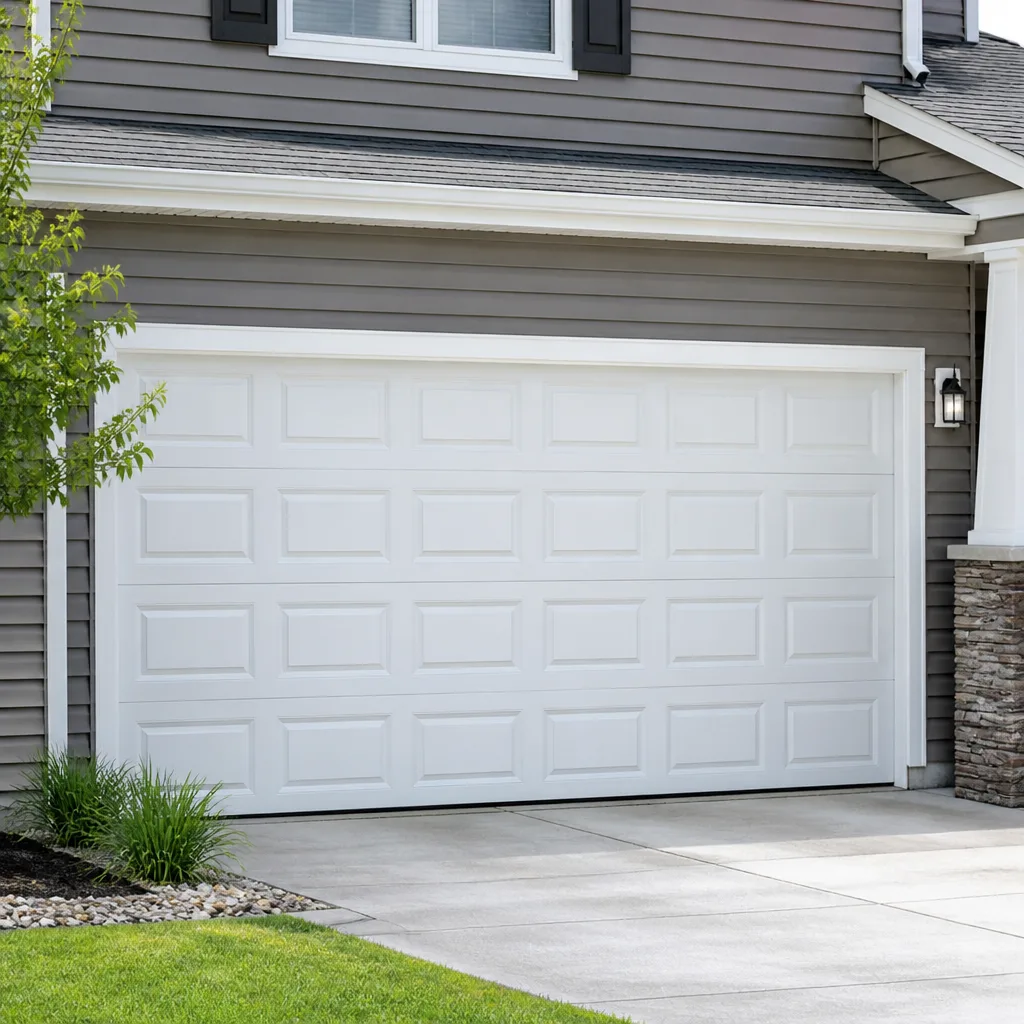 Raised-panel steel
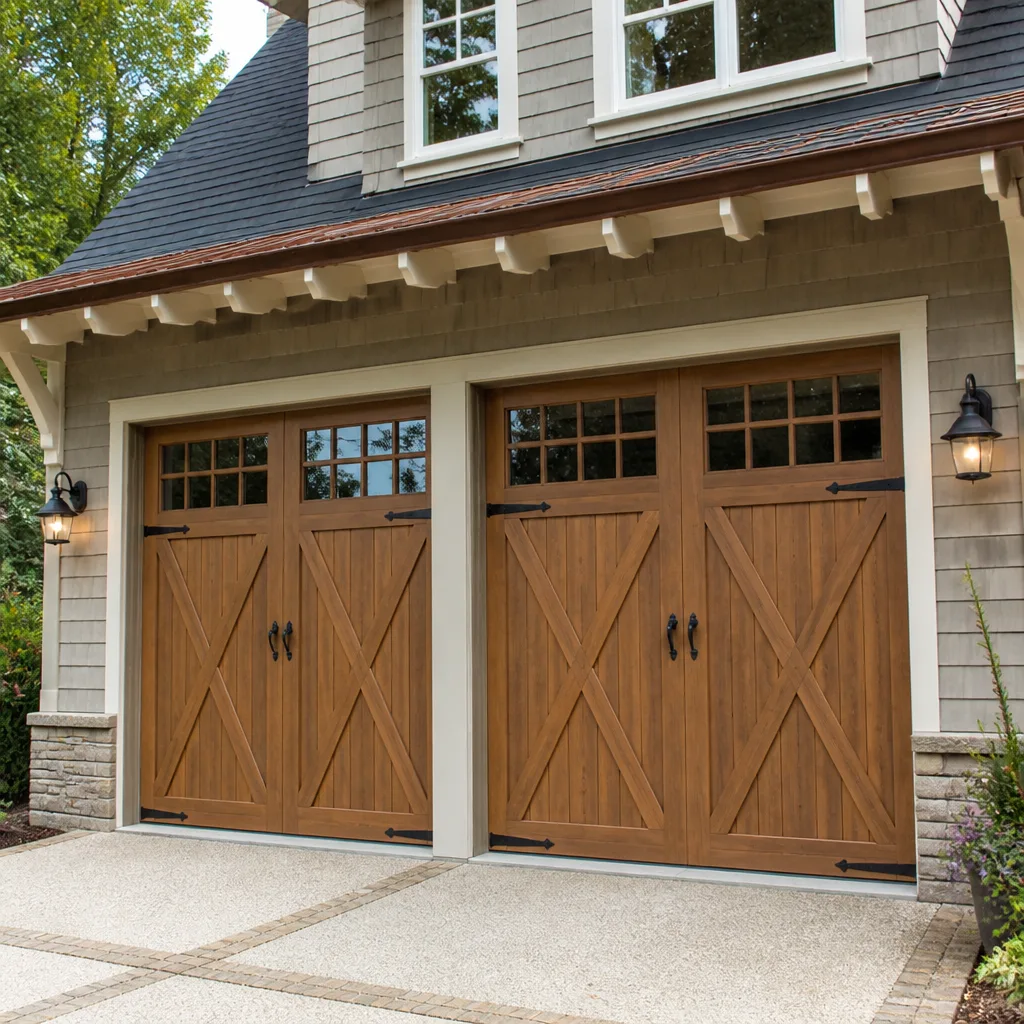 Carriage house
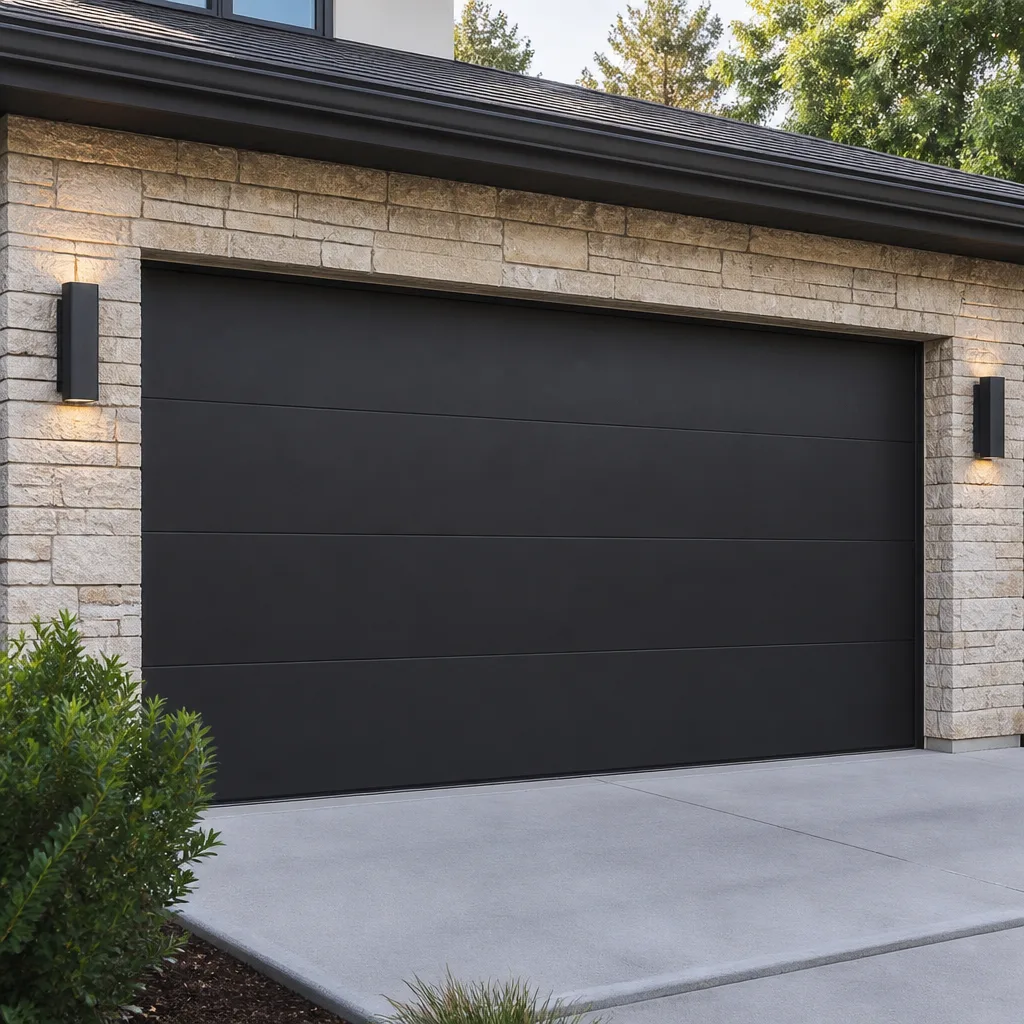 Modern flush
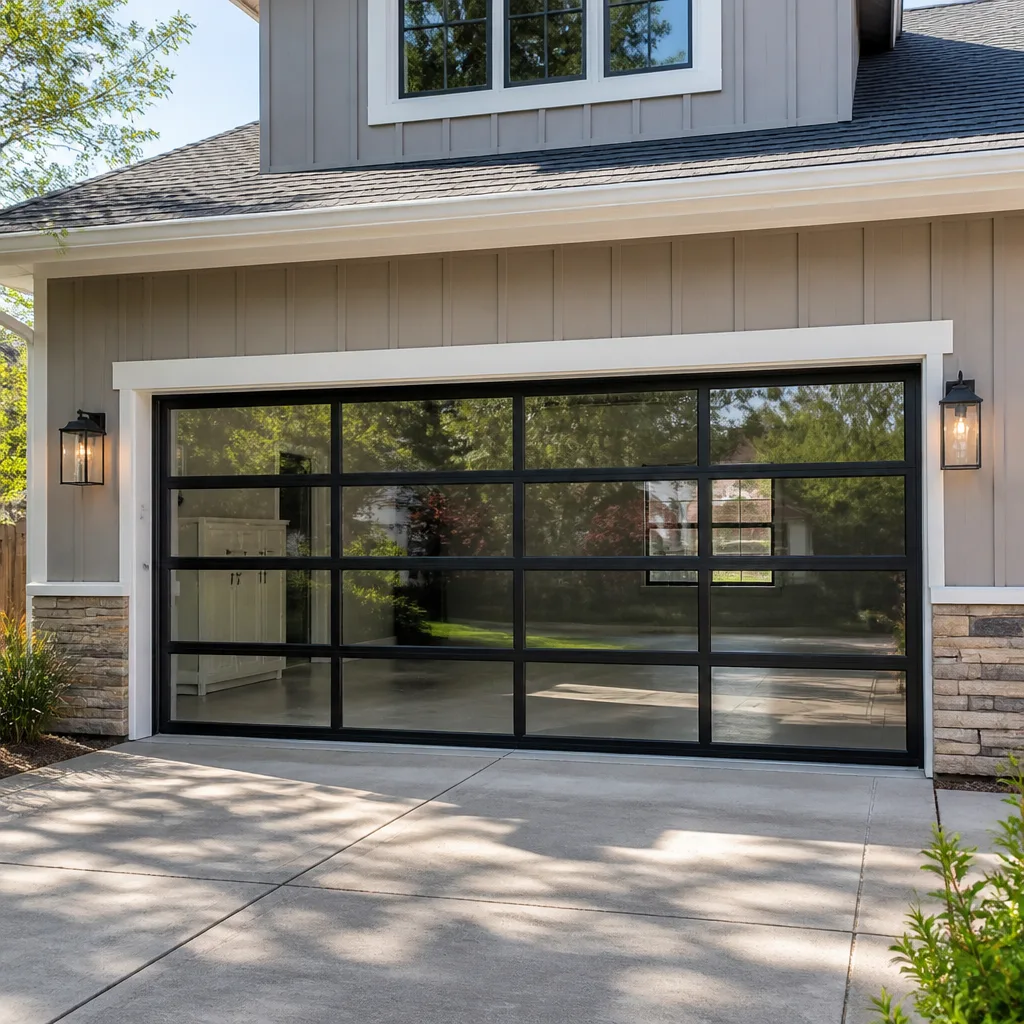 Full-view glass
 LiftMaster openers
 Chamberlain openers
Full 25-point door and opener safety check with every visit - springs, cables, rollers, tracks, and your LiftMaster or Chamberlain opener included
You get a price before we start. It does not change when the pro arrives.
Get your free estimateGarage Door Emergency Preparedness Guide for Chesapeake Homes
Most garage door emergencies in Chesapeake follow a script nobody warns you about. A storm knocks out power, you pull the red release cord so you can get the car out, the power comes back, and now the door won’t re-engage. That one misunderstood cord sends more people looking for help after a storm than bent panels or blown-out glass do. This guide covers the three situations Chesapeake homeowners actually face – storm damage, a power-outage lockout, and a broken spring with the car trapped inside – plus the pre-storm prep that prevents half of them. You’ll learn how to operate and reset the manual release, how to judge whether a storm-damaged door is safe to move, and what to have ready before you call anyone.
Quick Answer
If your garage door fails during a storm, power outage, or spring break, the safe response depends on which of the three is happening: pull the manual release only when the door is fully closed, never force a door with a broken spring, and lock the door shut if any panel or track is visibly bent. For a broken spring or a door stuck open at an odd hour, call Garage Door Repair Chesapeake Pros at (877) 745-2212 and have your opener model, door brand, and access situation ready. Emergency service is a core part of what we do, not something we squeeze in, and estimates are free.
Styles & brands we work with
- Raised-panel steel
- Carriage house
- Modern flush
- Full-view glass
- LiftMaster openers
- Chamberlain openers
Table of Contents
- How do you use the manual release in a power outage?
- How do you re-engage the door after power returns?
- A spring broke with the car inside – what now?
- How do you prepare a Chesapeake door for storm season?
- Is a storm-damaged door safe to operate?
- What to have ready before you call for emergency service
- Why your opener loses its settings after an outage
- What emergency calls look like across Chesapeake
How Do You Use the Manual Release in a Power Outage?
The manual release is designed to be used with the door fully closed and nothing underneath it. That’s the whole rule. In Chesapeake, the mistake we see most often is a homeowner pulling the cord while the door is halfway up, or pulling it and then trying to lift a door that’s still under tension. The release disconnects the carriage from the opener rail; it does not make a heavy door light, and it does not help if the door is open and the springs are still loaded.
Here’s the sequence that keeps you safe:
- Drop the door to the fully closed position using the wall button or remote before the power dies, if you still can. A closed door holds tension safely.
- Locate the red cord hanging from the opener carriage. On most Genie and LiftMaster units it’s a red handle on a cord near the rail.
- Pull straight down and toward the opener until the carriage releases with a click. It should not require force.
- Lift the door by the bottom section with both hands, straight up, and let it rest on the tracks. A properly balanced door stays where you put it. If it slams down, stop and call.
- Do not leave the door up while you’re gone if you can avoid it. An open door with a disconnected opener will not respond to your remote when power returns.
If you have a wall-mounted jackshaft opener instead of a ceiling unit, the release is usually on the side of the motor housing and works differently – check the label before you pull anything. If you’re not sure what you have, that’s a reason to call before you experiment. A dead door with the car on the wrong side is inconvenient; a door that drops on someone is not something we want to read about in a Chesapeake neighborhood group.
How Do You Re-Engage the Door After Power Returns?
Re-engaging the door is where a lot of Chesapeake homeowners get stuck, because the door has to be in the right position before the carriage will lock back in. The opener can only reconnect when the door is fully closed and the carriage is aligned with the trolley on the rail. If the door is up when power returns, the opener won’t grab it and the wall button will do nothing.
- Close the door manually by pulling it down by the bottom section until it’s fully seated.
- Restore power at the breaker or plug the opener back in.
- Press the wall button once. You should hear the opener run a short cycle and the carriage click back onto the trolley.
- Run the door up and down one full cycle and watch the safety sensors. If the door stops or reverses on its own, the safety beam is blocked or misaligned.
- Test the manual release again by tugging gently. It should be locked and immovable.
If the carriage won’t re-engage after three tries, stop. Something is misaligned, and forcing it bends the trolley or snaps the release arm. That’s the point where a technician should look at it. We handle garage door opener repair on Genie, Chamberlain, and the other major brands, and a misaligned trolley is a fifteen-minute fix when someone who knows the unit does it. It’s an afternoon of frustration when it’s the first time you’ve seen one.
One more re-engagement detail: after a long outage, the opener’s travel limits and force settings can drift, especially on older units. If the door closes and then reopens, or stops short of the floor, don’t keep pressing the button. The opener is telling you the limits need to be reset, and that’s a job for someone with a ladder and the right procedure.
A Spring Broke With the Car Inside – What Now?
A broken torsion spring changes the weight of the door dramatically. What felt like 150 pounds balanced is now 150 pounds unbalanced, and lifting it is dangerous. If your car is trapped inside and the spring is visibly snapped – you’ll see a gap in the coil above the door, or hear the bang – the first question is whether you actually need the car out right now. If you don’t, leave the door closed and call.
If you do need the car out, here’s the safe manual lift procedure, and the conditions under which you should not attempt it:
- Check the panels and tracks first. If either is bent, cracked, or off the roller, do not lift. The door can come out of the track and fall.
- Disconnect the opener using the red release cord, with the door fully closed.
- Get two people. One is not enough with a broken spring. This is where most injuries happen.
- Lift from the bottom center with both hands, keeping fingers away from the hinge points. Push up slowly and evenly.
- Have the second person guide the door to fully open and hold it while the car backs out.
- Lower the door slowly and let it rest closed. Do not leave it halfway.
Do not attempt this alone, and do not attempt it if you hear creaking in the tracks, see a bent panel, or feel the door binding on one side. A door with a broken spring is a door with a loaded weapon in it – the other spring on a two-spring system is still under full tension, and it can fail from the added stress. Spring work is one of the most dangerous repairs on a house, which is why we treat garage door spring repair as its own discipline rather than something a general handyman takes a swing at.
How Do You Prepare a Chesapeake Door for Storm Season?
Chesapeake sits in a wind zone where tropical systems and nor’easters both push through, and garage doors are the biggest opening on most homes. You don’t need permanent bracing to make a door more wind-resistant. What you need is a door that’s in good working order before the weather arrives, because a door that’s already loose, out of balance, or missing a roller is a door that fails first.
Pre-season preparation that actually helps:
- Test the balance. Disconnect the opener, lift the door halfway, and let go. A balanced door stays put. If it drifts down, the springs are weakening and wind load will stress them further.
- Check every hinge and roller. Loose hinges let panels move independently, which is exactly what you don’t want in a gust.
- Inspect the seal at the bottom. A worn bottom seal lets wind under the door and turns a closed door into a sail.
- Clear the tracks. Debris in the tracks causes binding, and a binding door under wind pressure can jump the track.
- Secure loose exterior items – trash cans, patio chairs, anything that can become a projectile against the door.
- Know your manual release location before you need it. Walk out and look at it now, not at 11 PM with the power out.
You don’t need to modify the door itself. Reinforcement kits and braces exist, but they aren’t a substitute for a sound door, and most failures we see after Chesapeake storms are on doors that were already in poor shape. If your door is older and you’re weighing repair against replacement, a free estimate on garage door installation will tell you which is the better spend for your house.
Is a Storm-Damaged Door Safe to Operate?
A storm-damaged door is safe to operate only if the tracks are straight, the panels are intact, the rollers are seated, and the door moves evenly by hand with the opener disconnected. If any of those fails, lock the door in place until a technician sees it. Wind damage often shows up as a subtle bow in a panel that’s easy to miss at a glance.
Use this checklist to judge:
- Check the tracks with a straight edge. A track that’s off by a quarter inch will bind and can throw a roller.
- Look for panel separation. If you can see daylight between sections or the hinges are bent, the door’s structural integrity is compromised.
- Test by hand. Lift the door a few inches with the opener disconnected. It should move smoothly and hold. If it drops, the spring is compromised.
- Look at the spring coils. A stretched or separated coil means the spring took damage and shouldn’t be operated.
- Run the safety sensors. Wave your hand through the beam. If the door doesn’t reverse, the sensors are damaged or misaligned.
If the door passes all of those, you can typically operate it temporarily while you wait for a service visit. If it fails any, lock it shut. We’ve seen Chesapeake doors that ran fine for a week after a storm and then dropped a panel because a bent hinge finally gave up. Not worth the risk. On Amarr and Wayne Dalton doors in particular, a bent hinge can tear free of the panel and take the roller with it, and that’s a much more expensive repair than the original damage.
What to Have Ready Before You Call for Emergency Service
Having the right information ready cuts your call time in half and gets the right parts on the way faster. Most emergency garage door calls in Chesapeake go better when the homeowner can tell us four things: what brand the door is, what model the opener is, what happened, and what access looks like at the property. None of that requires a ladder – the door brand is usually visible on the bottom section or on a sticker inside the jamb, and the opener model is on a label on the back or side of the unit.
Have these ready:
- Door brand and rough age. Clopay, Amarr, Wayne Dalton, and the rest all use different hardware. Knowing the brand saves a return trip.
- Opener model and brand. Model number, not just “LiftMaster” or “Chamberlain.”
- What you can see. Broken spring, off-track, door stuck open, opener hums but doesn’t move. A photo of the spring or track helps.
- Whether the car is inside or outside. This changes the priority of the call.
- Access details. Gate codes, driveway layout, whether the door is behind an HOA structure, anything that affects getting to the door.
- Whether the power is on. A power outage explains a lot of “the opener doesn’t work” calls.
With that information, a technician knows what to bring and how to approach the job. It’s also how we avoid the second-visit problem, which is one of the most common frustrations homeowners report with emergency garage door service. Bring it all in one call and you get a real fix, not a diagnosis.
Why Your Opener Loses Its Settings After an Outage
Openers lose their memory more often than people expect after a power outage, especially on older units. A surge – whether from the outage itself or the moment power comes back – can wipe the remote codes and reset the travel limits. That’s why your car’s built-in remote or the wireless keypad sometimes stops working after a storm even though the door still moves.
What usually needs resetting:
- Remote and keypad codes. Most openers need all remotes re-paired after a memory wipe. On newer LiftMaster and Chamberlain units, that’s usually a button press and a few seconds.
- Travel limits. If the door stops short or reverses before hitting the floor, the limits reset. This is a manual process on the unit, not something the remote can fix.
- Force settings. Openers sense resistance and adjust automatically. A surge can reset these, and the door then treats a normal close as an obstruction.
- Battery backup. If your opener has one, test it after the outage. A dead battery doesn’t show up until the next outage.
If you’ve reset the codes and the door still misbehaves, the opener’s logic board may have taken a hit. That’s a repair, not a reset, and it’s where a technician who knows the unit saves you from buying a new opener unnecessarily. We work on your existing system, whatever brand it is, and we don’t steer you toward a preferred unit for the sake of an upsell.
What Emergency Calls Look Like Across Chesapeake
Garage door problems vary a bit by part of Chesapeake, mostly because of housing stock rather than weather. In Great Bridge and Greenbrier, we see a lot of newer construction with two-car doors and LiftMaster or Chamberlain openers, and the common emergency is a spring failure on a door that’s only a few years old. In Western Branch and Deep Creek, the doors are often older, and the pattern shifts to worn rollers, tired springs, and openers that finally give out. In South Norfolk and the older parts of Chesapeake, single-car doors with original hardware are common, and the fix is often smaller than the homeowner expected.
Storm-related calls cluster around the same few things wherever you are: doors stuck open, springs that failed under wind load, and openers that won’t re-engage after an outage. The repairs themselves are similar. What changes is the parts inventory and whether the door can be brought back into service or needs to be replaced – and that’s clearer once a technician sees it. We’re not based in your neighborhood or dispatched from a local yard; we connect you with local professionals who do the work, and the estimate is free.
If you’re working through a problem right now, the fastest path is one call. We handle garage door repair across the full range, and if the door is beyond repair, the same team can talk through replacement options without sending you to a second company. That’s the point of a full-service setup: one call, full fix.
Common Mistakes to Avoid
- Pulling the manual release with the door up. The carriage disconnects and the door drops. Always with the door fully closed.
- Forcing a door with a broken spring. The second spring on a two-spring system is under full tension and can fail from the added load. Two people or a professional, never one.
- Operating a storm-damaged door to “see if it works.” A bent panel or hinge often holds once and fails on the second or third cycle.
- Assuming an opener problem is a door problem. After a Chesapeake outage, the opener code or travel limits are usually the cause, not the door itself.
- Ignoring the safety sensors. A door that closes and immediately reverses is telling you something. Don’t tape or bypass the sensors.
- Waiting for a small issue to become an emergency. A binding door or a weak spring is a service visit now and a broken door later.
- Calling without the brand and model. It’s the difference between a same-visit fix and a second appointment, and it takes two minutes to find on the door and opener.
See the difference
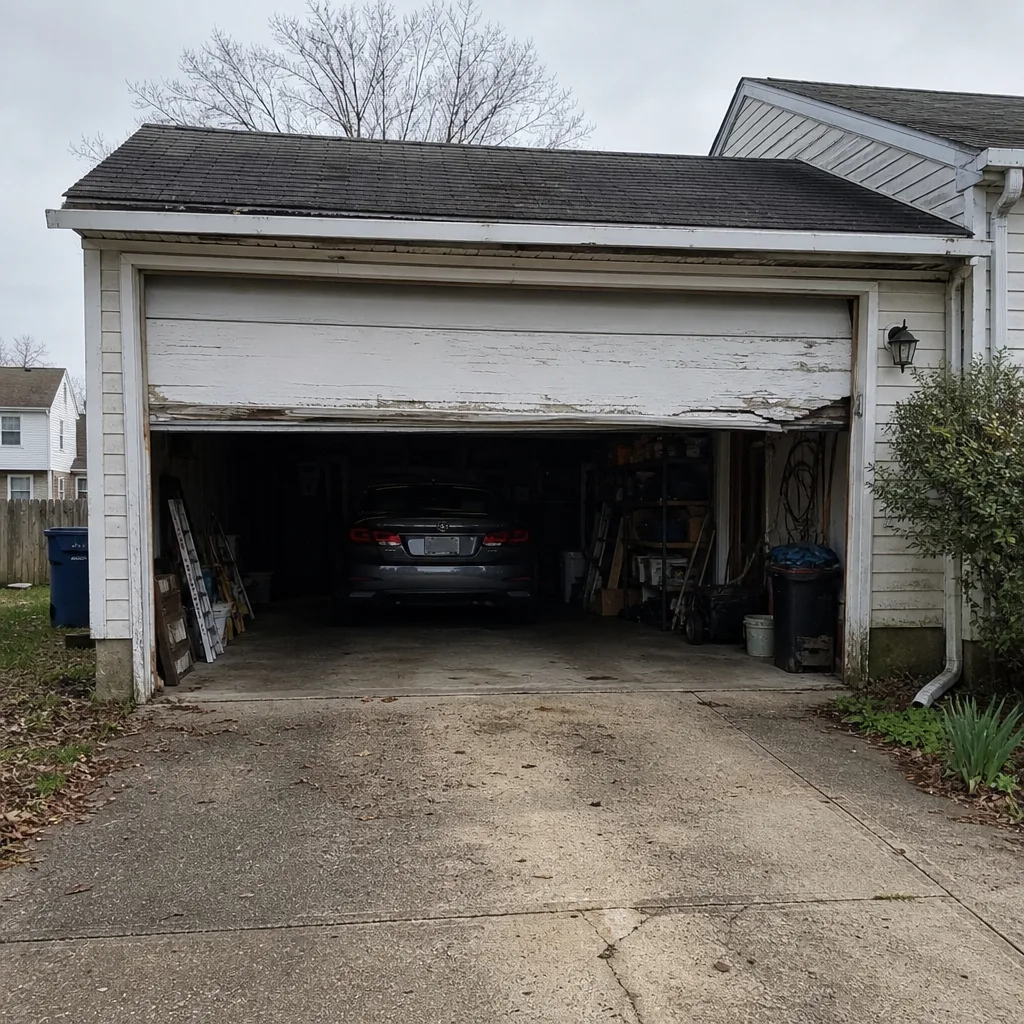 Before
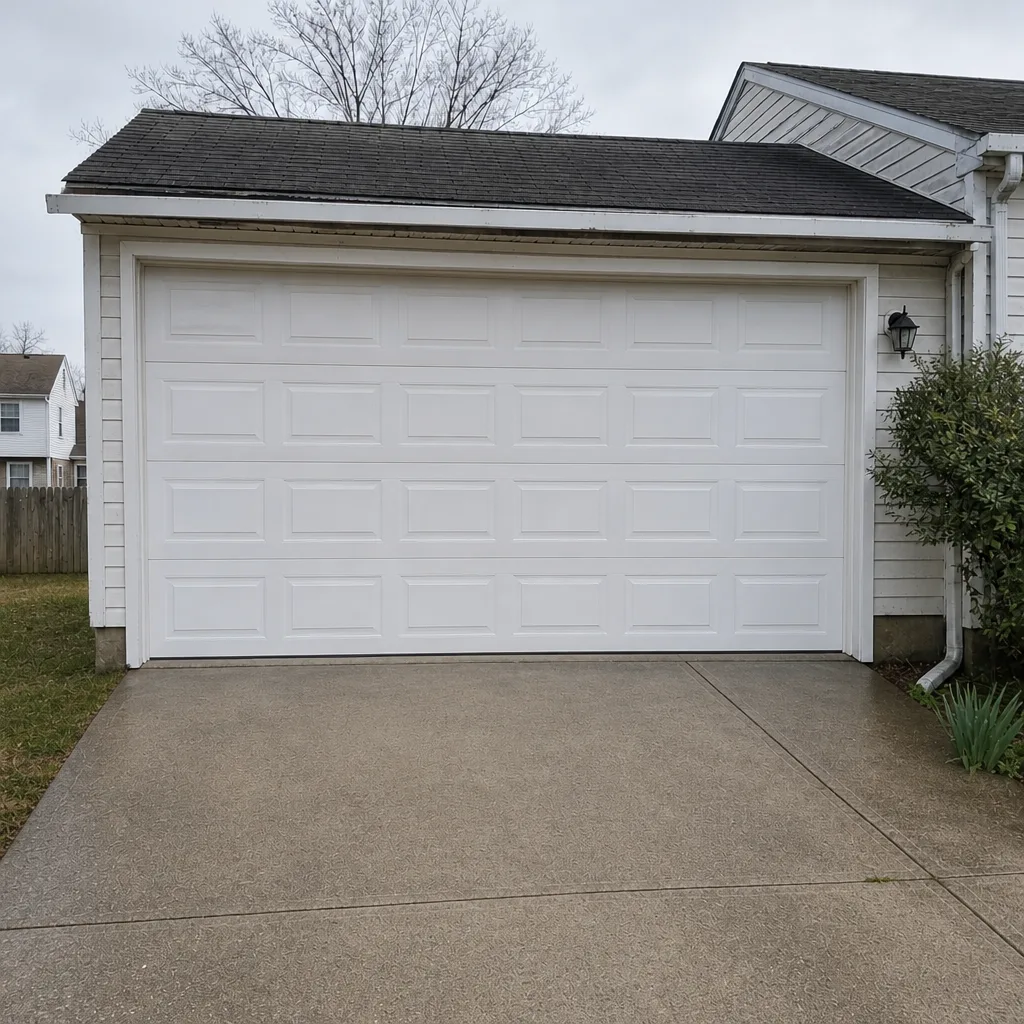 After
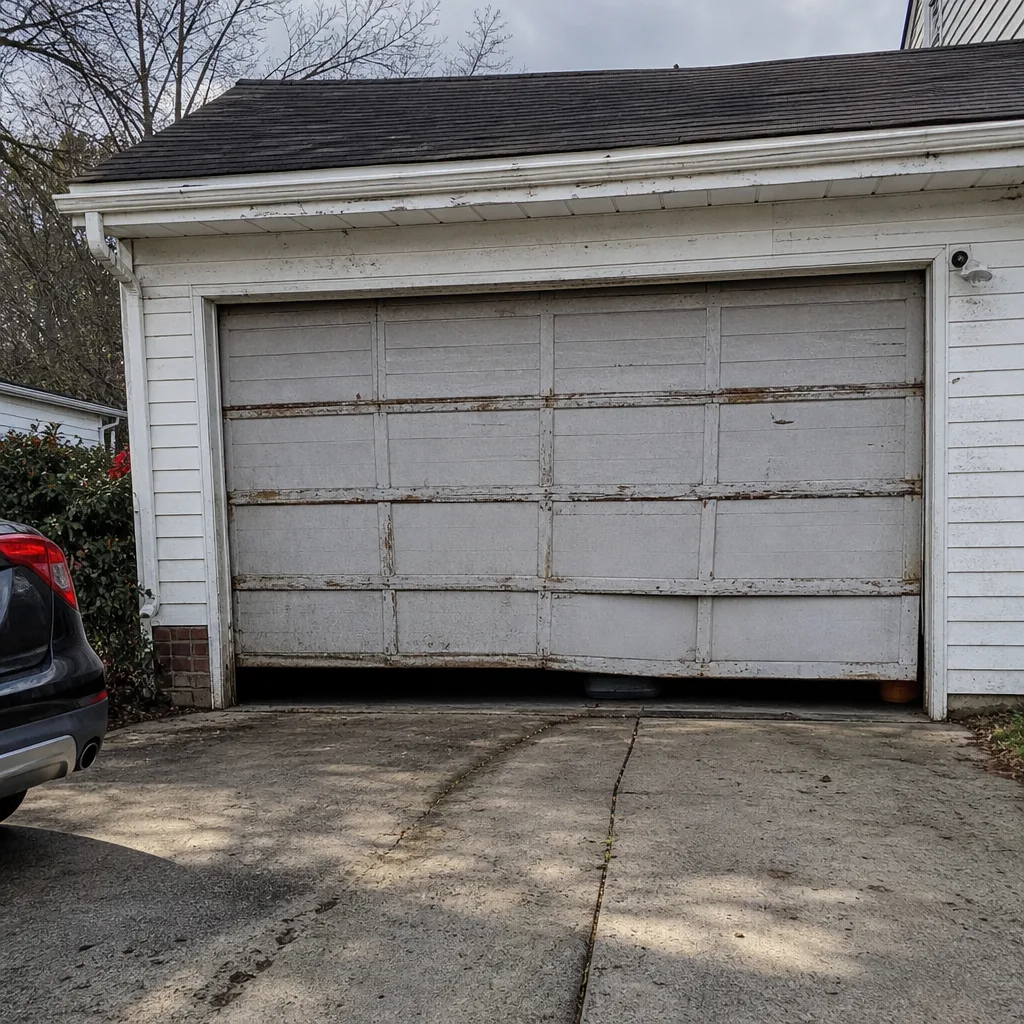 Before
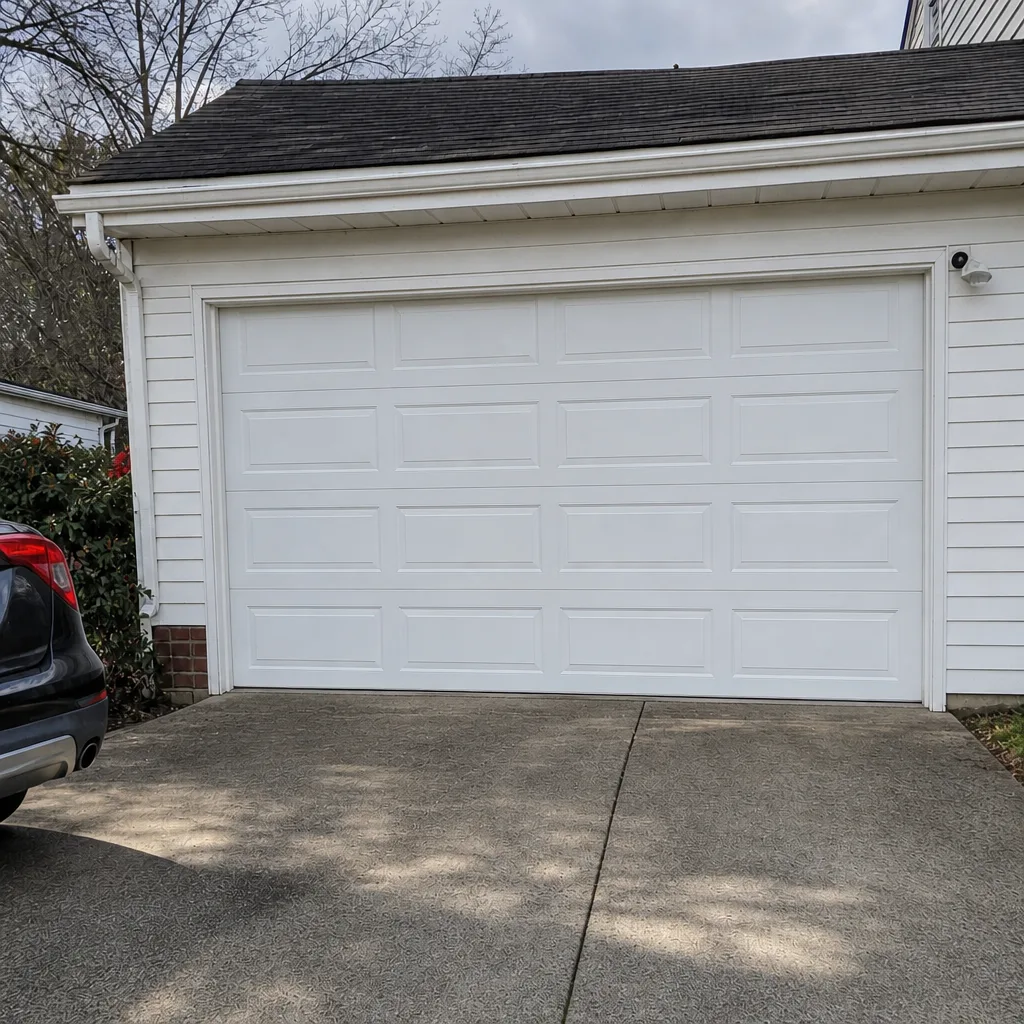 After
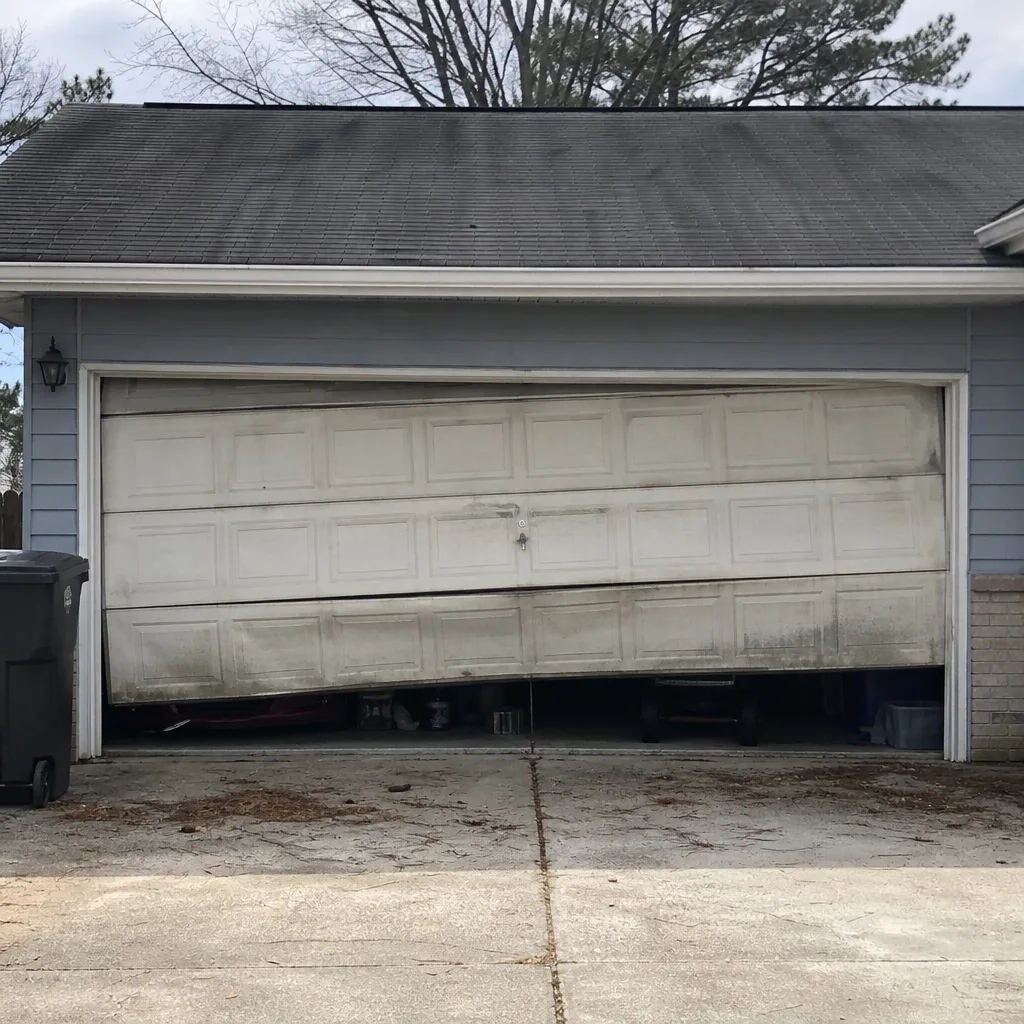 Before
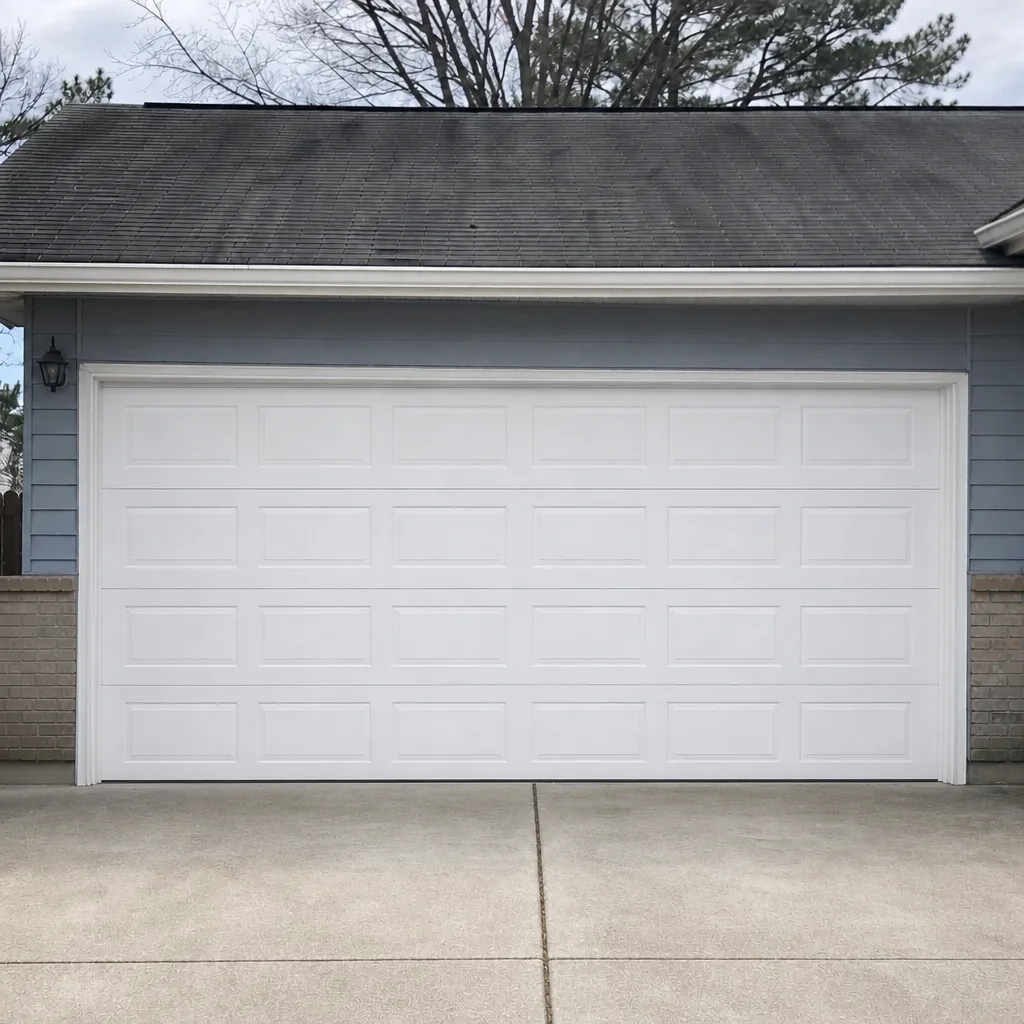 After
When to Call a Professional
Call a professional for any broken spring, any door off its track, any opener that hums without moving, and any storm damage where you’re not sure whether to operate the door. Springs and torsion hardware store enough energy to cause serious injury and should never be a do-it-yourself job. The same is true for a door that’s visibly bent or hanging unevenly. For a door that’s stuck open after a power outage, re-engaging the manual release is something most homeowners can handle, but if three tries don’t work, stop and let someone look at it. Garage Door Repair Chesapeake Pros offers free estimates in Chesapeake – call (877) 745-2212. Emergency service is part of what we do, not a side offering. Our technicians have up to 8 years of experience, and we work on whatever brand is on your door – LiftMaster, Chamberlain, Genie, Clopay, Amarr, Wayne Dalton, Craftsman, Raynor, or another system entirely. One call, full fix.
Frequently Asked Questions
Spring repair typically runs a few hundred dollars for a single spring, with matched pairs costing roughly twice that, since a pair should be replaced together. Off-track repairs, opener repairs, and panel fixes fall in similar ranges depending on parts. The written estimate is the price – we quote and agree before any work starts, so there’s no surprise invoice. Call (877) 745-2212 for an exact quote; estimates are free.
In most cases yes – emergency garage door service is a core part of what we offer, and a door stuck open is the kind of call we prioritize. What happens on the visit depends on what’s wrong, but the goal is back up and running the same day when parts allow. Call (877) 745-2212 and have your door brand, opener model, and access details ready.
No – the price we quote is the price you pay for the agreed work, and any change to scope gets discussed before we touch the door. If the damage is worse than expected, you’ll hear about it before we start, not after. That’s the point of a written estimate on emergency work as well as standard repairs. Call (877) 745-2212 for your free estimate.
The local pros we connect you with are licensed and insured as their state requires, so the person at your door is qualified to be doing the work. We don’t send unvetted help, and the truck that arrives is from a vetted local operation. Ask for the specifics on your call if you want the details in writing before the visit. Call (877) 745-2212.
Use the red manual release cord, but only with the door fully closed, then lift by the bottom section with both hands. If your car is inside and you don’t need to drive out, leave the door closed and wait for power. If the door won’t stay up when you lift it, stop – that’s a spring issue, not a power issue. Call (877) 745-2212 with the door brand and opener model.
Storm season does produce garage door problems in Chesapeake, mostly on doors that were already out of balance or had worn hardware. The damage itself is usually a bent panel, a popped roller, or a spring that failed under wind load, not structural failure. Pre-season checks on hinges, rollers, and springs prevent most of it. If you’re not sure your door is ready, call (877) 745-2212 for a free assessment.
The Bottom Line
Most Chesapeake garage door emergencies fall into three buckets: storm damage, power-outage lockout, and a broken spring with the car inside. Each has a safe path. Operate the manual release only with the door closed and re-engage it with the door closed too. Never force a door with a broken spring alone. Check tracks, panels, and hinges before you run a storm-damaged door, and lock it if anything looks bent. Have your brand, model, and access details ready before you call, because that’s what turns a service visit into a fix. For anything you’re not sure about, one call to (877) 745-2212 gets you a free estimate and a clear answer.
Written by the team at Garage Door Repair Chesapeake Pros.